Embracing the Technical Side of RVs
Seeking to broaden their knowledge, women flock to systems courses organized by the RV Women’s Alliance.

There’s a saying that when someone once complimented Fred Astaire on his dance prowess, a bystander commented that while he was impressive, Ginger Rogers did everything he did, but backwards and in high heels.
Since then, that phrase has been widely adopted by women who have wanted to show that they, too, can succeed in a man’s world, all while also rearing children and entering rooms typically reserved only for men.
That sure has been true historically when it comes to women in the RV industry who truly understand the technical side of things. But the RV Women’s Alliance (RVWA) has been working in partnership with the RV Technical Institute (RVTI) to change all of that.
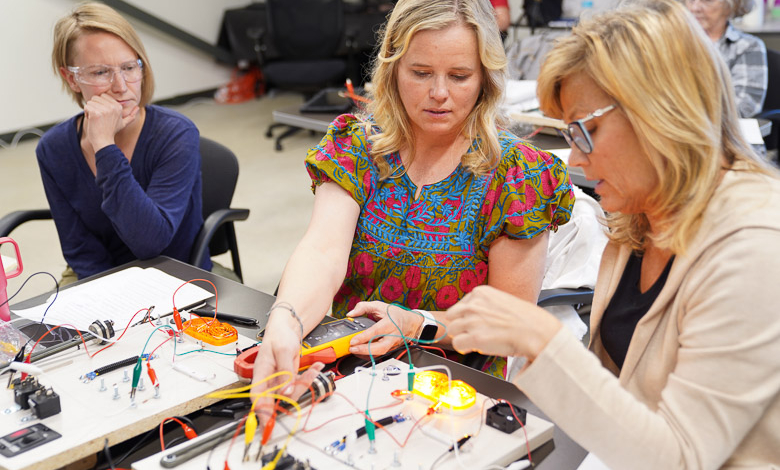
Enter the RV Systems All-Female Classes — a deep dive into Level 1 technician training offered for groups of women who want to learn more about the electrical, propane, plumbing and appliances in an RV.
The classes are ideal for women who have roles in parts, warranty, tech service, customer service and more, and who want to learn how these systems flow through an RV and how they all connect to the body, the chassis, generators and more.
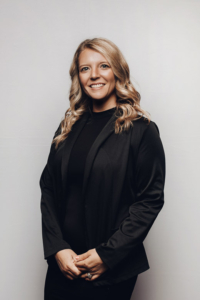
Jessica Rider, who operates Pull Through Sites Mobile RV out of St. Louis, is the lead instructor for the all-female systems classes and a Level 4 Master Certified technician. The classes started in 2021 by bringing in women who were not in the industry already. At the time, Bill Stewart, who passed away last year, was the lead instructor.
“He was a huge champion of getting that kicked off with us,” Rider says about getting the classes going. “Having Bill as a partner and RVTI, obviously, as a partner because we’re teaching their curriculum … was huge.”
Finding the Right Path Forward
While initially the classes might include women who were interested in becoming RV techs, they also included women who simply wanted to understand more about their own coach. Then in late 2024, the classes transitioned based on the feedback they were getting, Rider says.
One thing that changed was Rider coming on to teach; she mentored with Stewart to learn how to teach the technical material.
Then, in 2025, the program was revamped to steer away from teaching women to become techs to focus on women already in the RV industry who wanted to learn more about the technical side of RV units.
“So that’s where we pivoted in ’25, which has gone over extremely well,” Rider says. “We taught a class in Canada in ’25 [and] we did our first night class in ’25, which was great.
“Then this year we have now kicked off our first hybrid class,” she explains, stating she had three different hybrid classes starting in March when RV PRO spoke to Rider by phone.
Those classes include a five-week online course and then one week in person.
“We are also kicking off our first time we’re ever going to teach Level 2 this year,” she says. “We’ve always taught Level 1, and now we’re going to kick off … a Level 2 course.”
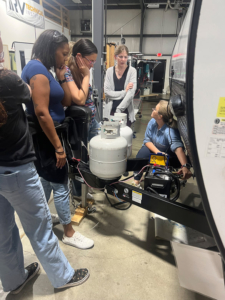 “I’m not teaching them how to be a technician,” Rider says. “I’m teaching them how to understand the technical pieces of an RV so they can do their job better. We are teaching service writers; we’re teaching people in warranty and customer service; women [who] are in marketing [who] touch the customer online. We’re teaching those different levels because they’re hungry for the knowledge. They want to do their roles better.”
This year, the in-person week of the course will be held in conjunction with the RVWA’s Chassis to Classy program. Through shared visions of RVWA members and the sponsoring suppliers, a Vision Vehicle — a fully built RV — will be created with help from RV manufacturers, suppliers and industry partners. The completed vehicle will be raffled, with proceeds supporting RVWA’s Charitable Foundation.
Two of the hybrid classes Rider is working with this spring are partnerships with OEMs Nexus and Alliance; the third class is a mix of 10 women in different roles in the industry — it’s that group that will work on the Vision Vehicle.
Teaching How Women Like To Learn
Rider says her style of teaching is to take things step by step.
“We’re talking and working through not just the theory of how electricity works, but we’re talking about how it actually flows through an RV from a woman’s perspective — not from a guy who’s been turning a wrench for 30 years,” she says.
Giving the students the confidence that they understand what’s going on before they dive in to repairing something is key, Rider says.
“A man will just grab a hammer and start going and figure it out as he goes, and we want to plan … We need to know the steps. And so, for a lot of women, because they don’t know every step or they don’t know how electricity flows, or they don’t know the difference between 120 volt and 12 volt and what runs where and how does it work, they don’t have the confidence to answer questions.
“What I try to really give them, and … what RVWA gives overall … [is] the confidence on this technical piece. It’s helping them understand not only the information, but the confidence to navigate a conversation with that 65-year-old guy customer that’s calling you and knows everything … and then he says, ‘my furnace doesn’t work.’”
Rider says they talk through scenarios like that during their lessons — she will ask students to bring her the last five customer complaints or questions they were faced with. Then they’ll discuss how to confidently take the knowledge they are learning in the courses back to their customers, and also to their employer and show how they’ve added value to their place of business.
Boosting Knowledge & Confidence
With approximately 200 women who have completed the technical courses through RVWA’s program, Rider says the future is likely going to consist of more hybrid classes. Because much of the course can be completed individually, and without needing time away from work, this method is more convenient for more people.
They are also beta-testing a new form of training, Rider says, with more info on that to come.
And with RVWA establishing the Bill Stewart Scholarship fund, to help continue his legacy and educate additional women on the technical aspects of RVs, assistance will be there for those who want to participate.
“We felt like that was something so near and dear to all of our hearts,” Rider says of the scholarship in Stewart’s name. “So women, when they apply for the class, they can apply for the scholarship as well … And we’ve been very fortunate to have several companies contribute.”
Rider says she is happy to be able to take the skills she’s acquired from her business and help others build their knowledge of RVs.
“I started my company wanting to get into this industry because of the gaps. There are blatant gaps in this industry, specifically with customer service. And I knew that I could bring my background and help change that,” she says. “And then getting involved with RVWA and getting the opportunity to teach these classes, it not only fills the gap because the more knowledge people have, the faster we can get things through warranty claims, the faster we can get customers back to doing what they intend to do with their RV, which is get outdoors.
“So, I love that from a personal aspect. And then, I really enjoy mentoring and helping specifically women see their potential. They may not understand their potential or how to use this knowledge to better themselves further down the line or ask the questions they need to ask. And I believe that I help bring that out in them.”