Beyond a Refresh: The Total Reinvention of the Montana
Keystone RV’s iconic fifth wheel enters a new era with diesel-pusher influence.
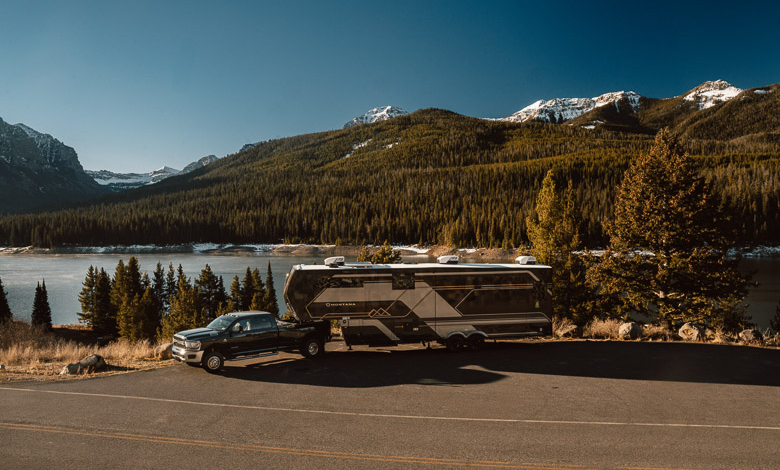
Keystone’s Montana fifth wheel, which first debuted in 1999, has undergone a major makeover. The reboot is a complete redesign, with nothing transferring from the old Montana. Keystone evaluated and redesigned everything, down to the smallest detail. Early feedback was highly positive, with the new product drawing raves from both customers and dealers.
The Montana and the Montana High Country offer more living space, more storage space, improved functionality and a new five-year structural warranty. The company began working on the relaunch last June.
“Montana has consistently been the No. 1 fifth wheel for the 25-plus years that it has been out there,” says Matt Christiansen, Keystone’s director of product development. “When we started building the Montana, we were building them based on a requirement that would not allow us to build anything over 430 square feet. So, the depth of our slides, the width of our main rails, all the things that enabled us to maximize our floorplans had to be kept under the maximum area rule that was in place.”
The project was not as simple as taking an existing floorplan and making it a few inches wider. It was more like starting over again with the entire model, including a new cap design, new exterior design and an interior overhaul.
 “We realized there was a need, and a growing demand, for longer, bigger, wider units,” Christiansen says. “Some of our competitors had gone to a wide body. We felt like it was time for us to do a wide body. Once you start going wider, at that point you have to design a new cap. You are redesigning basically everything.”
From the Top Down
The design began at the front of the coach.
“After we redesigned the cap, changed what we wanted on the profile of the unit and aesthetically got where we wanted to be for the front, we stopped and considered our knowledge of the Montana buyer,” Christiansen recalls. “Most of them haven’t just owned one RV before. They have owned multiple. In a lot of cases, this is the fourth, fifth or sixth RV that they have owned. They know, after a lifetime of owning RVs, exactly what they want and what they don’t want.”
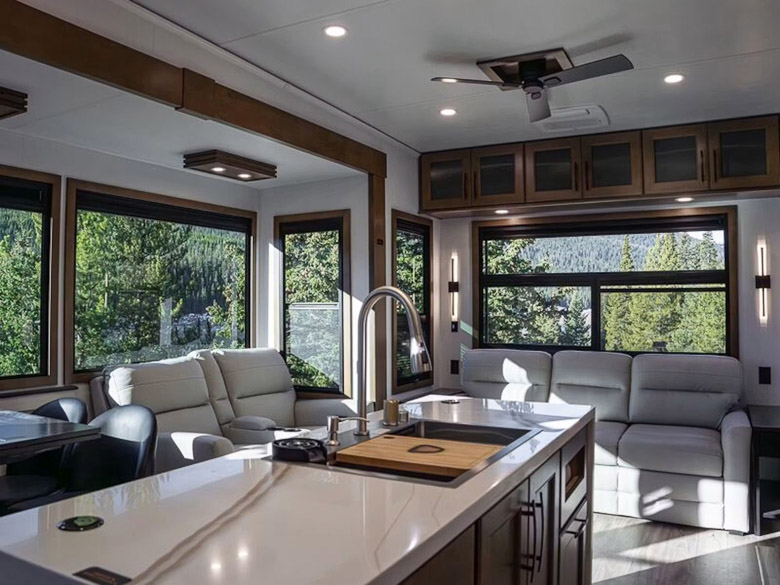
In redesigning the bedroom, Keystone sought functionality combined with pleasing aesthetics. Starting with the front closet, more drawers were added.
“We wanted a comfortable bedroom area, with enough walking space around the beds,” Christiansen says. “When we got to the bathroom, we talked about how every traditional, high-profile fifth wheel bathroom has a sink with about 4 inches of countertop space around it, and maybe a couple of drawers, and is very small. For people who are staying in these for an extended period of time, as a lot of Montana owners do, countertop space is important. We wanted them to have the best bathroom on the market.”
Christiansen says the Montana buyer is basically in the same category as a diesel pusher buyer. “There are a lot of similarities; it’s just that one is a motorhome and one is a towable. The customer is similar. We have a lot of customers who trade in a diesel pusher for a Montana. We looked at that market very seriously and the innovation. As you look around the exterior of this unit, especially the 3100 that we debuted at [Florida’s Tampa SuperShow], you will see the tray that goes out both sides and a massive pass-through storage compartment that is extremely well finished with composite materials that make it easy to keep clean.”
Keystone designed storage areas on the main rails on the rear, which the company touts as unique in the industry. There are also pull-out trays on the rear. Among the upgrades is a convenience center with hot- and low-point drains and gate valves. Anything needed for winterizing, or to set the unit up in a campground, is all located in one space. All of the upgrades required a robust structure and frame, with a huge upgrade in the suspension.
One of Keystone’s objectives was to incorporate a tray that slid out both sides. Trays are an integral part of the higher end market, said Christiansen, who likens the new Montana to luxury diesel pushers in terms of the new amenities.
“In the motorhome world, especially in the diesel pusher world, the trays are just a huge part of the higher end market. They are in every single thing that you see. Another thing in every diesel pusher or Class A motorhome is an outdoor TV. In the towable world, that hasn’t been taken on into every unit. The Montana buyer is basically in the same category or lifestyle as a diesel pusher buyer.”
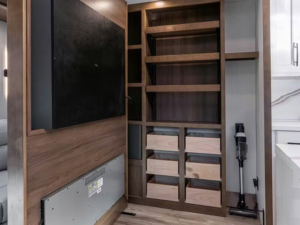 “All of those things had to be engineered into the trailer,” says Nick Ebenroth, general manager of High Profile Fifth Wheels. “You couldn’t just take an existing Montana and add the trays on both sides. It had to be redesigned into it. The quest for functionality that we had from the get-go started with bedroom, bathroom and storage. Everything else was built on it from there. From an innovation standpoint, that whole design element was intentional. The other part we felt was very innovative was knowing that units were eventually going to get wider and bigger, as the customers have been demanding. We have even had a lot of requests for a 50-foot Montana. A 50-foot fifth wheel seems unfathomable to us, but it is just a sign of the changing times.”
As the redesign progressed, Keystone put its suppliers, both current and new, on notice that they were looking for upgrades. Innovations and fresh ideas were given priority.
“We have absolutely some of the best suppliers in the industry today,” Ebenroth says. “We let them know what we were looking to do.”
Bigger & Better
Montana’s dealers are pleased with the results, as were potential customers at the Florida RV SuperShow back in January, when they got a look at the new model.
“We did a quick turnaround from the point where we were just writing down ideas on a piece of paper in the summer of last year, to the Open House fall show,” Ebenroth says. “They were ecstatic over the things that over the years we have wanted to do. Once you go to the wider design, there are things we were able to do. Without those extra inches, we would not have been able to do the bathroom redesign.”
Keystone reps said earlier this year that they expected to build between 5,000 and 8,000 units of the new Montana this year, depending on market conditions.
Customers continue to ask for bigger units, Christiansen says.
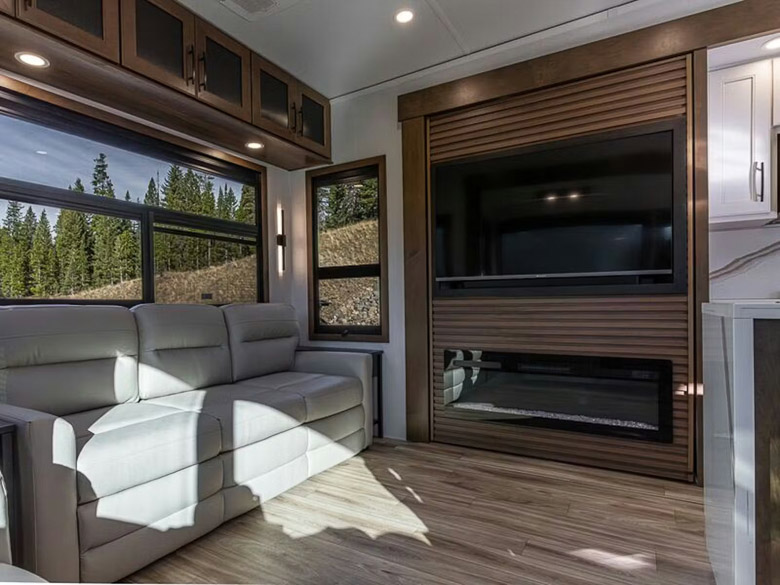
“When we went through this redesign, we added a lot of enhancements to our frame and to our running gear to enable them to withstand carrying a larger unit, whether it is a 30-foot or someday perhaps a 50-foot unit,” Christiansen says. “We have more and more customers doing extended camping, where they have the units parked for months on end. While being able to be nimble and travel around the country is crucial, so also is being able to set up camp and not move for months, whether it is on the beach or in the mountains or wherever.”
Customer feedback about adding more space has been consistent, something Montana officials say they accomplished with the redo.
“The customers who want bigger units are not necessarily driving coast to coast,” Christiansen says. “Some just want to be able to go and set up for the weekend in their go-to spot. Going to a 50-foot unit will open up a whole new set of things we will be able to do with space. There is only so much we can do in a 33-foot box, but when you go to bigger, the creative minds can think of ways to utilize that space. This is the hottest topic out there. Consumers have changed from a price mentality to a value mentality.”
Christiansen says the Montana brand has become synonymous with fifth wheels. He notes there are more than 140,000 units on the road today.
Keystone stays in touch with customers through the Montana Owners Club, which the company says is the largest owners club in the U.S. The club holds multiple rallies throughout the year.
“We are constantly asking questions about the next thing they’d want on a unit,” Ebenroth says. “We have a rally here every fall and we go and sit with them and speak and hear what they think. Those features we learn about, we let guide us in our new design. We double down and try to listen to our owners as much as possible, as well as emails and questionnaires throughout the year.”