Cooling Maintenance Starts Now: Prevent Peak Season Problems
Simple ways RV dealers can ward off summer cooling failures and confidently explain the fix.

You see it every summer — the first heat wave hits, and the calls pour in.
Here’s a simple, practical path to manage RV cooling maintenance early in the season, so you can help customers avoid bigger problems when the season peaks.
Maintenance: Why Bother?
Basic maintenance helps fend off the flood of peak season system failures that create service bottlenecks, angry customers, dealer distractions and frustration all around.
“The most preventable issues we see come from skipped basics,” says Nick Cook, technical customer experience representative at Dometic.
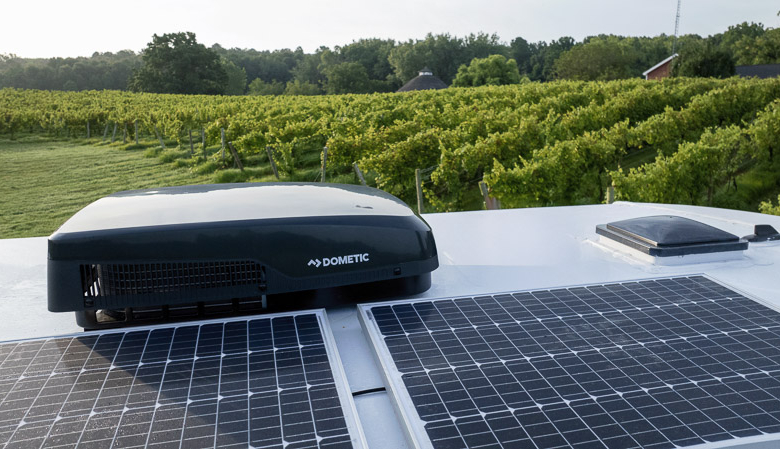
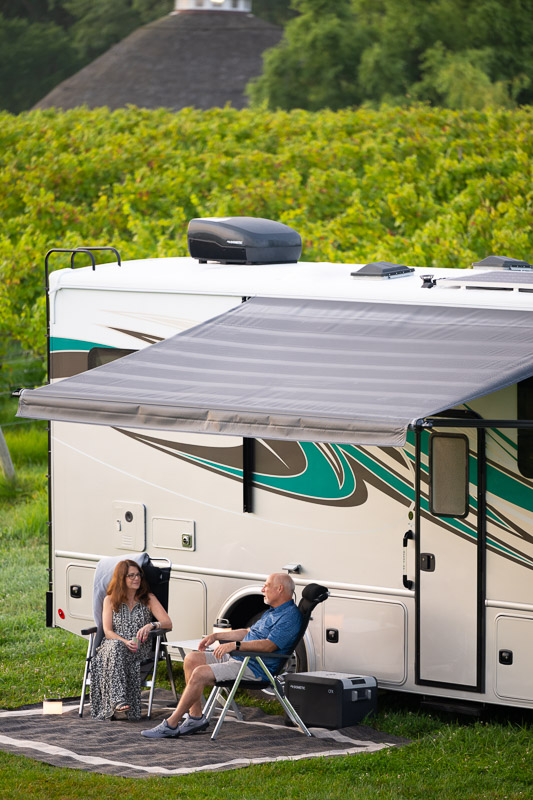
Summer cooling performance comes down to three interconnected systems: air conditioner, ventilation and shade. It’s the RV cooling ecosystem. Shade reduces incoming heat load. Ventilation removes hot, humid interior air. Together, they allow the AC to operate under optimal conditions.
“Get those three right,” says Cook, “and you prevent most midseason breakdowns.”
Shade: Maintaining the First Line of Defense
Shade is the first line of defense against heat load.
Properly functioning awnings and slide toppers can significantly reduce interior temperatures and overall air conditioner demand.
Dirt, grit, mildew and sagging can damage fabric and hardware. Before diagnosing AC performance issues, take these three steps to make sure shade systems are functioning as designed — so your AC isn’t working harder than it should.
 Fabric Condition & Cleanliness (Baseline Inspection)
Inspect awning and slide topper fabric for:
- Mildew or biological growth
- Staining and odor retention
- Fabric stretching or deformation
- Damage caused by improper wet storage
If you find mildew or other biological growth on vinyl fabric, here’s a service-approved cleaning method. Remember — this is only for use on vinyl.
- Mix ¼ cup of mild dish soap and ¼ cup of bleach in 5 gallons of water
- Fully extend the fabric, then saturate it
- Partially close the fabric with the solution still on it
- Allow the solution to remain for approximately 5 minutes
- Re‑extend and rinse thoroughly
- Ensure fabric is completely dry before retraction
 Sagging & Water Pooling Prevention (Slide Toppers)
Sagging fabric reduces effective shade coverage, increases heat gain at the slide roof and contributes to AC complaints tied to elevated cabin temperatures.
A common cause is water pooling. Pooling stretches the material and reduces its shading capability. Here’s what to look for and address when you inspect:
- Verify torsion spring tension and readjust as needed
- Replace severely stretched fabric (tension adjustments cannot restore elasticity)
- Confirm correct rollout alignment and hardware positioning
 Essential Protection Hardware Verification
Proper hardware setup ensures consistent tension, full coverage and long‑term shade performance. Put particular focus on these structural essentials:
- Anti-billow devices
- Spacer brackets
- Cradle kits
Anti‑billow devices stop the topper from unrolling in transit. They need to point up at an angle between 11 and 1 o’clock. Twelve o’clock is ideal. Remember that toppers over 192 inches require two devices.
Spacer brackets are required when slide flanges are thicker than standard. Make sure they are installed and working to prevent fabric chafing and premature wear.
Cradle kits are a must. They are required for anything over 198 inches and helpful on any long topper to prevent roller‑tube bowing. Make sure they’re adequate and secure.
Ventilation: Keeping the Airflow Flowing
Vent fans are a powerful piece of cooling performance. They reduce interior humidity and expel hot air, allowing the AC to operate at peak efficiency.
Before you dive too deep into the AC’s performance, check the vent fan.
Operational Condition
Start with these steps. They’re simple and can make a big difference.
- Clean fan screens
- Verify fan motors spin freely and replace noisy or slow‑responding units
- Inspect rain sensors on equipped models and clean as necessary
- Inspect plunger switches for corrosion or sticking
- Confirm roof‑vent lids open fully and seals are intact
Preventive Ventilation System Maintenance
Vent components exposed to heat, UV and moisture degrade quickly. Take these steps to improve future reliability and avoid midseason failures.
- Lubricate fan motors where applicable to maintain rated fan speed and prolong motor service life
- Replace brittle, cracked or UV‑damaged vent lids to ensure full opening range and prevent storm‑related failures
- Verify ventilation components are structurally sound prior to summer operation, and you can reduce midseason service visits tied to airflow and moisture complaints
The AC Unit: The Last Piece of the Puzzle
The rooftop AC is the primary — and most complicated — cooling engine. Most issues come back to a component or voltage issue, but before you get too deep, take the unit’s temperature.
Confirm Baseline AC Performance (Before Component Condemnation)
Start by verifying temperature split to determine whether the AC is fundamentally capable of cooling.
- Use a thermometer at the return and the closest supply vent
- The split should be in the 18-20 F range (Note: High humidity conditions can reduce differential without indicating failure)
- If it’s below range, begin electrical and mechanical testing of the compressor, fan motor and capacitors
Then, verify initial airflow. Restricted airflow reduces heat transfer efficiency and can falsely appear as low cooling output.
- Inspect return air filters for restriction
- Check ducts and baffles for collapse, blockage or misalignment
- Inspect evaporator and condenser coils for debris or contamination
Identify Mechanical & Refrigeration Red Flags
Next, you’ll want to perform a mechanical component inspection.
- Observe condenser and evaporator fan operation
- Listen for abnormal motor noise or irregular cycling
- Inspect capacitors for visual damage or bulging
Then look for refrigeration issue indicators.
- Check for oily residue near fittings or coils
- Inspect for signs of excessive frost, icing or abnormal condensation
Electrical Supply & Control Diagnostics
Finally, do voltage and amperage testing. Undervoltage is a common contributor to AC underperformance and premature component failure.
This type of testing should only be performed by professionals.
- Measure incoming voltage at the unit
- Confirm voltage in/out at the control board
- Verify amperage draw on primary components (compressor, fan motor)
- Inspect wiring continuity between thermostat, control board and components
- Confirm connections are secure and corrosion‑free
- If appropriate, bypass wiring with direct connection when isolating suspected harness issues
Take a Deeper Dive: Level-Up Your Expertise
There is another type of maintenance that can keep you ahead of the game: training.
 Expanding your knowledge and growing your skill set prepare you for more complex issues and help you deliver better customer service.
There’s no shortage of technical content out there, but if you are looking for a deeper, system-level understanding, consider structured, interactive training that looks at the whole cooling picture.
A go-to program for RV service techs is the Dometic Product Academy (DPA), which focuses on how shade, ventilation and air conditioning work together. Over 1,000 technicians choose DPA as their primary learning resource.
Your Summer Just Got Cooler
Stronger cooling expertise leads to stronger service performance. When you understand the entire cooling ecosystem — shade, ventilation and AC operation — you can diagnose issues faster, reduce no‑fault‑found outcomes and prevent avoidable midseason failures.
And it makes it easier to communicate the ecosystem and basic maintenance to RV owners.
A quick conversation at pickup can go a long way. Remind them to use shade, run ventilation and keep up with basic maintenance.
Communication, maintenance and knowing what to look for before it becomes a problem — these are the keys to a smoother summer service season.