How Mobile RV Technicians Can Help Dealers Reduce RECT
Mobile technicians are emerging as a practical extension of RV dealership service departments, not a replacement.

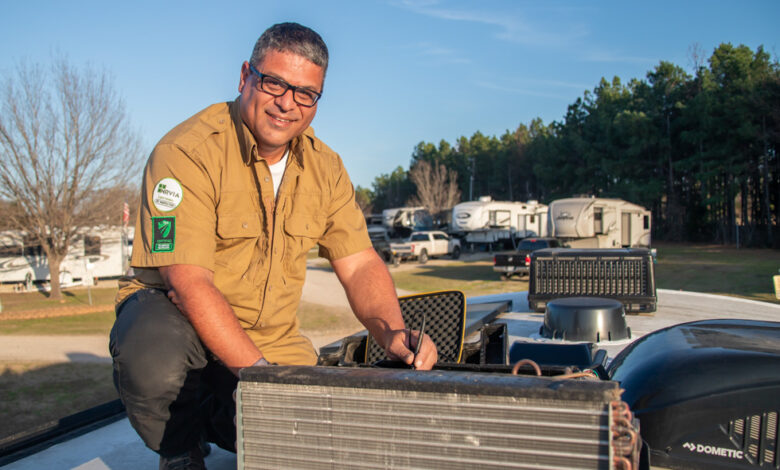
Service managers across the RV industry are balancing scheduling, staffing, customer expectations and operational efficiency as service demand continues to grow. With the industry placing greater focus on reducing RECT (repair event cycle time) within dealership operations, another part of the service ecosystem has been growing alongside it: mobile RV service.
Rather than competing with dealership service departments, mobile technicians are increasingly viewed as part of the broader service landscape. They can support customers in rural markets, assist with overflow work and help address service needs that arise outside traditional dealership environments.
For dealers evaluating service reach and flexibility, understanding how this segment operates can be helpful when considering a range of options.
Service Capacity
According to industry studies, the shortage of qualified RV service technicians remains a long-term workforce challenge facing the industry. The RV Industry Association has identified workforce development as a critical priority, and dealer surveys consistently highlight the value of service efficiency and customer experience.
 The challenge is not only volume, but also geography. Many RV owners live far from dealership corridors, and others travel seasonally across large distances. These dynamics can create real logistical challenges even for well-run service departments.
Most service managers have experienced situations where scheduling, distance and technician availability impact service timelines. These realities help explain why mobile service has become a valuable complementary option across the industry.
The Growth of Mobile Service
Mobile RV service is no longer a fringe segment. Today, a growing number of certified mobile technicians operate across the United States, offering on-site diagnostics, documentation support, maintenance and nonstructural repairs. Growth in this segment is driven by:
- Consumer interest in convenience
- Geographic diversity of RV ownership
- Increasing technical complexity of modern RV systems
In practical terms, many mobile technicians perform similar diagnostic and repair work as dealership service teams, just in a different setting.
For many dealers, this can offer an opportunity to expand service options without changing their core business model.
Collaboration Makes Sense
The most effective service operations today are not thinking in terms of “either-or.” Instead, they are evaluating how mobile technicians may function as a supplemental resource in the right situations.
In cases where additional flexibility is helpful, dealers may choose to refer select customers to vetted mobile technicians for specific types of work. Dealers supporting customers several hours away may also coordinate mobile service to help maintain continuity of care when appropriate.
Many mobile technicians are experienced in warranty-related documentation and can provide photos, diagnostics and supporting information that can assist service departments when documentation is needed.
In each case, the goal is not to replace dealership service, but to thoughtfully support service reach when it aligns with a dealership’s operational structure.
Training & Standards Still Matter
Across the RV industry, there is broad alignment around the importance of safety, professionalism and technical competence. Most reputable training programs are built from the same foundational standards, codes and best practices, all aimed at creating a consistent baseline of knowledge for technicians, regardless of where they work.
 Where training programs may differ is not in the principles being taught, but in how those principles are delivered. Some environments emphasize extensive hands-on experience with live systems and full-size RV units, while others provide flexible classroom or virtual formats that support working technicians and dealership teams. Both approaches contribute meaningfully to workforce development and serve different needs across the industry.
For dealerships evaluating mobile technicians, the most relevant indicators remain consistent with any hiring decision: evidence of formal training, appropriate credentials, clear documentation practices, professional communication and sound business practices. These are the same qualities dealerships seek within their own teams.
The industry’s focus on improving service efficiency and reducing RECT continues to reinforce the importance of technician readiness, strong fundamentals, efficient documentation and continuous improvement. Whether service is delivered in a dealership bay or in the field, the goal is the same: safe, high-quality, professional service for RV owners.
Dealer-Customer Relationship
Some dealers understandably consider how mobile service might affect customer relationships. In practice, many have found that when managed intentionally, coordination with mobile technicians can support a positive customer experience.
In these situations, the dealership remains the primary point of contact and retains control of the customer relationship, while using mobile service selectively as a supplemental resource when appropriate.
Clear communication, defined scope of work, documentation expectations, agreed-upon communication channels and transparent billing practices all contribute to effective coordination and strong customer outcomes.
Consumer Expectation Shift
 Today’s RV owners increasingly expect service models similar to those in other industries, including on-site diagnostics comparable to mobile automotive services, faster turnaround times, digital documentation, remote scheduling and communication options, and greater transparency throughout the service process. Dealerships and service providers across the industry are continuing to evolve alongside these expectations to support long-term customer trust and relationships.
Many mobile technicians and inspectors are already aligned with these expectations by the nature of their business models.
A Universal Solution?
None of this suggests that mobile service is appropriate for every repair. Structural work, complex electrical diagnostics and warranty-intensive procedures often require dealership facilities, specialized equipment and controlled environments.
However, a significant portion of common service work can fall within the scope of trained mobile technicians, including electrical troubleshooting, appliance diagnostics (repair and replacement), plumbing repairs, HVAC issues, slide adjustments, preventative maintenance and system inspections.
How that work is handled ultimately depends on each dealership’s internal processes, risk tolerance and operational model.
The Bigger Picture: Industry-Wide Capacity
As service demand continues to grow across the RV industry, no single approach will address capacity needs on its own. Long-term progress will come from a combination of efforts, including expanding the technician workforce, strengthening training pathways, refining scheduling and workflow processes, leveraging technology to support documentation and communication, and exploring collaborative service models where appropriate.
Mobile technicians represent one complementary layer within this broader ecosystem. When viewed as part of an interconnected service network, they can contribute to improved service accessibility and flexibility across a wide range of ownership scenarios, while preserving the strengths and structure of existing dealership service models.
A Look Forward
The RV industry continues to evolve in response to changing customer needs, workforce dynamics and operational realities. As part of that evolution, dealerships are exploring a variety of approaches to support service capacity, technician development and customer experience.
Some dealerships may find value in selectively using mobile service as a supplemental option in certain situations, while others may focus primarily on internal staffing, training and process improvements. There is no single model that fits every operation, and service strategies often reflect the unique needs of each dealership and market.