How RV Dealers Can Boost Sales Through Relationships
Relationship-focused selling that prioritizes customer comfort builds increased rapport and trust, boosting sales results, profit margins and repeat business.

One of the ongoing questions RV salespeople face today is determining what the most successful approach to selling really is. They constantly face the age-old question of whether to build their sales approach around their product or customer relationships. In some cases, companies choose that answer for them by purchasing a “canned” selling system from one of the many companies that have them, and mandate their sales staff follow it.
Although some of these programs are generally pretty good, their biggest flaw is that they are one-dimensional, where they try to sell to every customer in the same way, when it’s obvious that each customer is different. Most focus on a few fundamental things: what customers want, why they want it and the price they are willing to pay for it, and then lead them to the product that fits that prescription, using tricky words to entice them. After that, it’s simply a matter of whether it’s in the dealership’s inventory or if they will have to order it.
It’s just not that simple anymore, evidenced by the fact that even good dealerships close sales at only a 30% closing ratio, meaning that 70% of customers walk out the door without buying. However, with today’s customer, affected by a staggering economy and shrinking budgets on luxury items, there’s a lot more to the shopping and buying experience than just product and price.
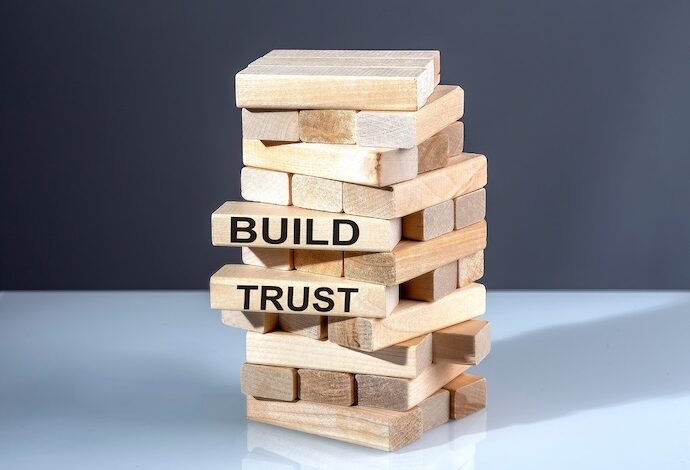
After many years of research, the Harvard Business School determined that in the 21st century, all selling would now be relationship-based rather than product-based. They determined that the salesperson who could form a solid relationship and trust with their customers would have a much better chance of earning a sale.
Brian Tracy, a bestselling author and highly skilled trainer on how best to work with customers, makes the point that “if you think too much about the sale, rather than the relationship, you will neither have the sale nor the relationship”.
When I started selling years ago, I learned through trial and error (mostly error) that relationship selling was the approach that not only worked best with my personality and approach to selling, but it also helped me achieve significantly better results. I remember going home and saying to my wife, “If I can get my customer to like me and trust me, I can sell them the state of Alaska.” This approach was so successful, I could add it to our company’s selling system to achieve higher sales and get more referrals, and that’s exactly what I did.
Reading Customer Signals: Adapting Your Sales Approach
Most salespeople either sell the way the dealership tells them to, or in a way they feel most comfortable with, with little or no emphasis on understanding how each customer prefers to be sold. In coaching and training salespeople now, I often say that the moment you decide to sell the way you prefer, rather than the way the customer prefers, is the moment when a potential sale is lost. It’s a moment the customer will subconsciously recall when you’re trying to ask for the sale and they say, “I want to go home and think about it.”
Salespeople need to make it a priority in the early stages of the meet and greet with a customer to figure out how they prefer to be worked with through the shopping process, and relationship building is now the “straw that stirs the drink” in doing so. If you’re paying attention to the signs and listen to them, most customers will make it obvious as to how they prefer you to lead them through the shopping. Relationship building is best achieved with a series of small steps in succession, and that takes a few extra minutes. Yet it’s an approach that many RV salespeople don’t seem to have the patience for. Many can’t shake the lure of rushing their customer out in the lot to see their product, often before key relationship-building steps have been established. Some dealerships even mandate a time frame, such as 15 minutes, where they need to be in front of the sales manager for product selection. This can be a big mistake, which occurs at the expense of building a relationship that the customer must have to feel comfortable buying later.
Unfortunately, relationship building doesn’t run on a stopwatch, and every customer has a different amount of time, process and comfort level they require to feel at ease. It’s a process that starts with relieving the anxiety they walked in with, then building comfort, rapport and finally trust. It’s during this time that the customer will reveal not only the type of person they are, but most importantly, how they prefer to be sold to. Although they will never say it, they must like you and trust you before they will buy from you.
The first priority to be proficient at relationship building is to get the stopwatch out of your head. Simply put: It’s not a race. Start with each customer with an “empty head” — what it took to build a relationship with the last customer doesn’t matter with the next one, even if it takes an hour to help them feel comfortable liking and trusting you. They are in charge of how long this takes, not you.
Too many salespeople want so badly to dazzle their customer with their product knowledge, speaking skills and competence that they tend to focus on what they need to say, rather than what their customer needs to sense to feel a comfortable relationship is being built. In other words, slow down. Too many salespeople have their foot on the gas in those early stages, and they drag the discomfort the customer walked in with right out into the lot.
Stop babbling and listen, ask follow-up questions if you need to, write it down if necessary and then take your cues from the customer as to when they are ready to move forward … and not a minute before. Each building step is a separate segment, one at a time. Along the way, you will discover critical information about your customer: whether they prefer a fun and joyful experience looking at RVs, or a specific, detailed, fact-based product presentation backed up with written documentation, brochures and manufacturing facts.
Earning Customer Trust
Most customers will not reveal how they prefer to be sold until you make it safe and comfortable for them to take that risk. This is especially true with the anxious customer who had a bad experience with the salesperson from your competitor, who may have been so determined to get a sale, they bombard them with thousands of words, before stopping long enough to hear anything the customer has to say.
Each salesperson needs to be perceptive enough to determine whether their customers’ decisions to buy are based on logic or emotion, and then tailor their product presentation and closing approach to that. If not, you’re trying to fit a square peg into a round hole, often with little success.
The detail-oriented, logical customer doesn’t only want to hear about how much fun an RV could be. They want a fact-based, information-packed presentation, with specific details, backed up with written documentation and handouts that complement the verbal product presentation. They not only need to know “what” each feature is, but also how it’s made and the nuts and bolts of how to operate it. Of course, to do this, salespeople must master product knowledge to adjust product presentations to the way their customers will relate to, trust and accept.
Salespeople who focus on adjusting presentations to the customer also contribute to increased rapport and trust. Effective selling today is relationship building, combined with a mastery of product demonstration that complements your customer’s style.
The salesperson who masters technical product information and can then be enough of a chameleon to adjust presentations to each type of customer can accept is the one who becomes a respected, professional salesperson.
Here are some other reasons why relationship selling so often comes out on top:
- Helps to sell more high-profit accessories, which increases the amount of the total sale, the amount financed, as well as the salesperson’s commission
- Promotes repeat purchases, because a solid relationship has already been established
- Increases the percentage of future sales at premium pricing and higher grosses
- Helps customers overcome their overall dissatisfaction if technical or service issues happen to arise with the product
- Reduces the need for objections to arise in future transactions
- Increases customer referrals, given by a satisfied customer to a trusted friend
Each customer interaction will teach us something, whether we sold to them or not, so it’s important to replay and assess each customer visit from start to finish, to help identify moments where a relationship was built or lost.
In conclusion, master the knowledge of your product, but make relationship building your highest priority before deploying it with customers.