How UV & Ozone Exposure Impact RV Tire Longevity
A closer look at the environmental factors accelerating rubber degradation and the preventative steps service professionals should recommend.

As a RV dealer or shop professional, you know that tires are more than just rubber. They are the mechanical link between your customers’ trailers and the road. Tires are a component that can quickly turn a routine pull or vacation into unexpected delays and last minute scrambles. While the tire wear from miles of open roads, gravel and the occasional curb bump are obvious, invisible environmental factors from the sun and surrounding atmosphere can quietly degrade the rubber long before the owner notices a problem. Understanding how environmental factors affect tire health and what can be done to minimize their impact, makes you not just a service provider, but a trusted adviser.
What are these environmental stressors?
Let’s break down these invisible enemies.
UV damage is most associated with sunlight, but low levels can also come from certain types of artificial light. Over time, UV rays attack the polymer chains of the rubber. It initially appears as many fine cracks on the surface of the tire that gradually grow in length and depth. The damage from UV light also causes the rubber to discolor, become more brittle and lose its flexibility.
Ozone is present everywhere in our atmosphere and most damaging when in high concentrations. Ground-level ozone is formed through chemical reactions in sunlight. It degrades rubber more rapidly than UV rays alone by cleaving the rubber compound’s carbon-carbon double bonds in the polymer chains. Unlike the cracks caused by UV, ozone cracks can propagate deeper from the surface and are most observed in the sidewall area where the tire flexes the most.
How do tires combat these stressors?
Modern tires are constructed from complex formulations of natural and synthetic rubber compounds and reinforced with fabrics and/or steel. The exposed rubber components feature additional anti-ozone and UV-protectant packages that are mixed into them to provide protection against these environmental attackers. These additives act as a self-replenishing barrier, reacting with ozone and UV to neutralize the gas and rays before they can reach the rubber. They migrate to the surface of the tire through a concentration gradient known as “blooming.” Remember, these additives are finite, and when they are gone, so too is the built-in protection.
What speeds up the degradation?
Location plays a large role here. High altitude and hot and sunny areas see accelerated UV damage because the atmosphere provides less protection and the exposure to more UV rays. Urbanized and industrial areas often experience higher ozone levels because emissions from vehicles and industry react in sunlight to form ozone, while dense development and tall buildings can trap pollutants and limit their dispersion.
Storage also plays a role in the UV and ozone impact on our tires. Storing tires outdoors, even in the shade, exposes them to UV rays. Storing them indoors helps protect them from UV but can increase the exposure to higher concentrations of ozone from sources like nearby electrical equipment.
How can techs help?
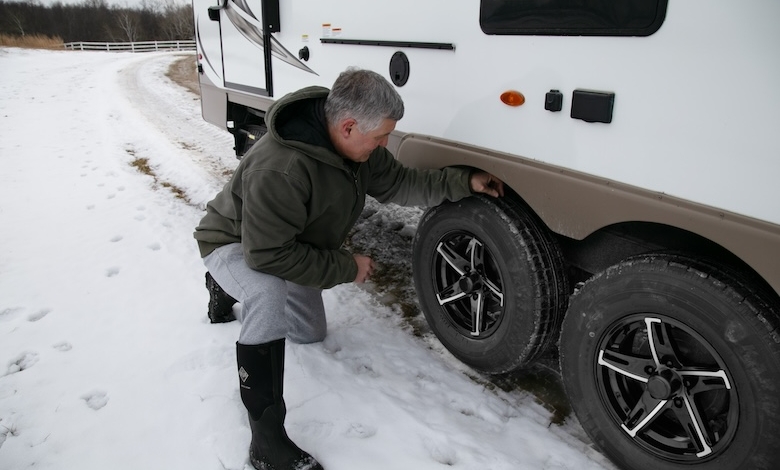
Here’s where technicians and dealers can really make a difference. Visual inspections during routine service can reveal signs of rubber hardening and early cracking. The bottom of tread grooves and slots, as well as the tire sidewalls, generally will show signs of stress first. Signs of fine cracks, increased rubber stiffness and discoloration of the rubber are all indications that the tire is aging.
Checking tire inflation is another crucial activity and something that should be done on a regular basis. Improperly inflated tires puts extra strain on areas that may be weakened by exposure to UV and ozone. The additional strain will expedite surface crack growth.
 Clean and shiny tires can look great, but be aware that some cleaners can also strip away those protective additives that migrate to the tire surface. There are tire conditioners that can help slow UV damage when applied properly, but unlike the antiozonants and UV protectants built into the rubber compound, they do not self-replenish once the protective barrier is worn away.
Educating your customers also goes a long way in helping them get the most life out of their tires. Many owners don’t realize that environmental damage can occur even while their trailer or RV isn’t being used. Taking a few minutes during service to explain why tires age, what to look for and how simple practices like using wheel covers or moving the trailer or RV can make a big difference.
Light surface cracking alone does not necessarily mean a tire must be replaced immediately. Keeping records of the trailer or RV tires’ age, along with notes on tread and sidewall condition, can help guide future inspections and replacement planning.
Final Thoughts
UV light and ozone are invisible enemies that work slowly but persistently to tell a story through markings left on the sidewalls and tread. Dealers and technicians have the knowledge and skills to catch damage early and guide customers toward solutions that extend tire life and ensure safety on the road.
Every inspection, every conversation and every proactive step adds up. It’s more than avoiding roadside emergencies. It’s about giving RV owners the confidence to enjoy their adventures, and knowing their tires and their safety are in capable hands. In the end, that’s what makes your expertise invaluable. You’re not just selling or servicing RVs — you’re keeping adventures rolling safely.