Not Your Mother’s Class C
Newmar’s production strategy reflects a broader industry shift toward intentional design, advanced tech and lifestyle-driven refinement.

There is a quiet shift happening in the industry. Rather than overnight disruption, it’s a slow and steady recalibration of what travelers want. Increasingly, that’s becoming a Class C.
Class A motorhomes have historically been synonymous with expansive, feature-rich and premium. By contrast, the humble Class C was often seen as the pragmatic choice — more approachable and versatile, but rarely the crest of design or innovation. However, that distinction is dissolving, giving way for OEMs such as Newmar to intentionally reshape the segment.
The company’s Class C activity has recently turned into company milestones, especially for one specific subcategory.
“As Newmar has expanded its presence in the Super C segment, we’ve been proud to introduce several meaningful firsts — both for our lineup and for the broader marketplace,” says Kevin Erdman, Super C product marketing manager.
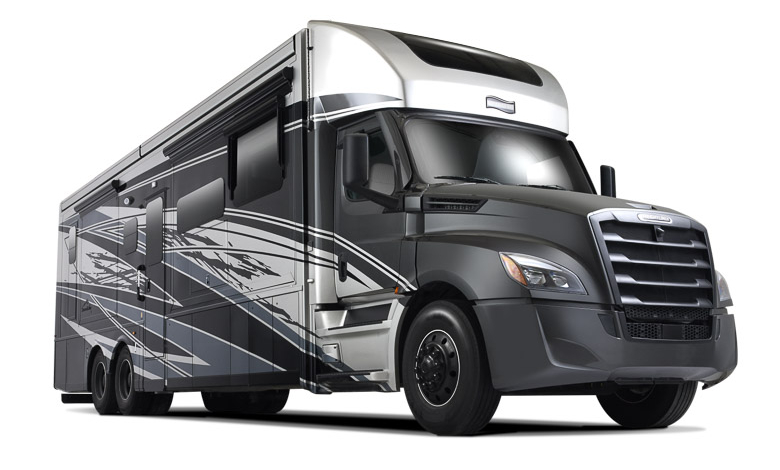
Model year 2026 debuts included the shortest floorplan available on a Freightliner S2 chassis — an introduction that speaks directly to demand for maneuverability without sacrificed capability.

On the other hand, the company also launched a new “ultra-premium” model dubbed the Summit Aire. With towing capacity up to 30,000 pounds and residential-grade elements, the model represents a clear statement: luxury is no longer exclusive to the Class A.
Customer response has been strong, Erdman says, especially for the balance of power and a more manageable footprint.
A New Language of Luxury
Customization remains central to Newmar’s overall strategy — now with a refined approach.
A standout example is the company’s Artisan Series Custom Paint Process for Summit Aire and the 45-foot Supreme Aire. The process gives each rig a one-time-produced exterior graphic package, which is permanently archived as a true one-of-one design — an added sense of exclusivity, Erdman says.
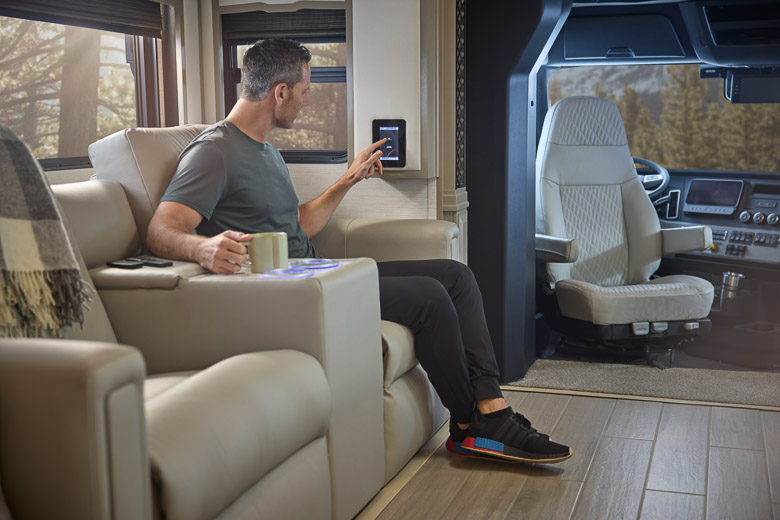 Inside the coach, personalization is less about structural changes and more a curated feel.
“We are seeing continued interest in personalization, but it’s typically rooted in design choices and lifestyle-driven features rather than dramatic floorplan adjustments. Customers want their coach to feel uniquely theirs — warm, comfortable and reflective of their personal style — while still benefiting from Newmar’s proven quality, craftsmanship and service.”
That philosophy extends to functional flexibility. Features such as a cab-over bunk — previously limited to a Grand Star standard — was expanded as an option for the full line: Super Star, Supreme Aire and Summit Aire. The enhancement supports a wider variety of travel styles, Erdman says, from family use to extended stays needing more sleeping or storage options.
The company has always believed that customers shouldn’t have to choose between personalization and quality, he adds. Newmar’s production approach is to offer customization with a framework that keeps its consistency and craftsmanship.
Where Function Meets Lifestyle
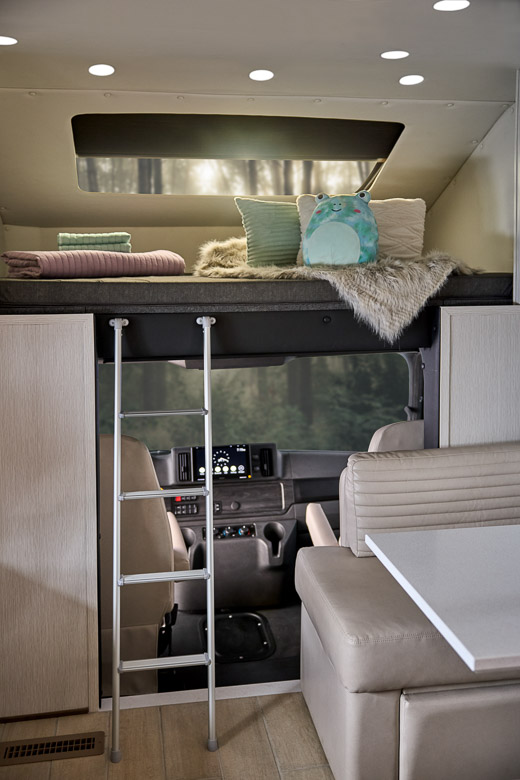 Lifestyle trends — particularly the rise of remote work, extended travel and micro-adventures — are changing the way RVers are engaging with the Super C segment.
“They’re looking for coaches that support that flexibility with comfortable, functional living and working environments,” Erdman says. Watching a strong movement toward refined taste, Newmar is responding with updates that cater to both functional and aesthetic needs.
“Warmer, more organic materials, supple leathers and elevated interior design cues are increasingly influencing customer expectations,” Erdman says. These trends help guide the OEM as it continues to create coaches that both perform powerfully and feel like home.
Sustainability is also becoming a meaningful innovation driver. Newmar is actively interested in eco-friendly materials for its design process. New power technologies and market-driven systems for its products are on the horizon — options that will improve user experience, be more desirable and cost-effective, Erdman says.
“Lithium products are quickly becoming some of the most commonly requested features, and we are working
to provide them where they offer the best and most efficient sources of
energy, reliability and sustainability,” he says. “This approach is shared across all of our product lines, including our newest Class C, Freedom Aire. In a compact Class C footprint, we offer an all-electric energy package featuring a Lithionics 960 aH battery source along with roof-mounted solar panels for additional recharging capacity.”
The system has been widely popular, he says, giving owners alternative energy sources that mean more time outside.

“We see and learn about new technologies almost every day,” he says. “Everything from smart appliances to remote connectivity for coach monitoring and control, to safety and security — the availability of new technological advances plays an important role in new product development.”
Erdman says he sees that trend continuing and likely accelerating in the near future.
The Connected Coach
Newmar relies on a blend of customer and dealer feedback to guide its product decisions.
“While we leverage a range of inputs, the most meaningful channels are the ones that allow us to connect directly with owners, prospects and our valued dealer partners. Conversations at the Newmar Service Center, Newmar Academy sessions, dealer interactions, RV resort events, rallies and even spontaneous discussions on the road all play a vital role in shaping our thinking.”
RV shows give the team opportunity to see unfiltered reactions to its layouts, features and perceived value. The company’s Service Center offers visibility into real-world use, spotlighting where durability, usability and the overall experience could be bettered.
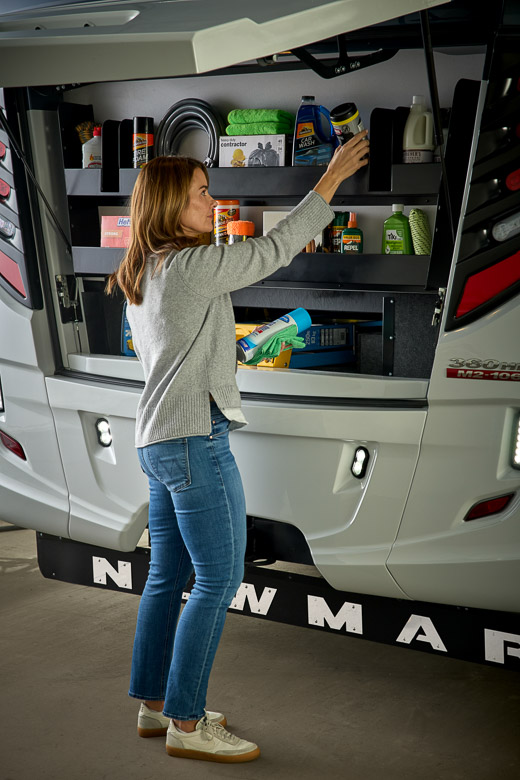 “Digital research also plays a key role — we track online behavior, sentiment and competitive shopping patterns to understand emerging expectations around technology, connectivity and design,” Erdman says.
Newmar’s Annual Dealer Meeting is another main source of inspiration. Paired with continual conversations throughout the year, dealers are happy to talk ordering, trade-ins and on-lot customer interactions.
“Together, these channels give us a clear, 360-degree view of what Class C shoppers and owners value most, ensuring our product decisions stay grounded.”
The Super C market has grown in both retail volume and representation, triggering new buying motivations and “hot buttons,” he adds.
“While enhanced towing capacity and cargo capacity are still strong motivators, the bandwidth of the product segment has increased the profile of buyers to include those who place more importance on things like driving comfort and floorplan flexibility. Ease of chassis service has always been one of the most important core customer drivers, and it still remains highly important along with safety.”
A Category on the Rise
If the past decade in RV manufacturing was defined by expansion, the next might be defined by refinement.
That sentiment proves true for the Class C segment, which by most indicators, is in a “very healthy position,” Erdman says. Newmar sees continued growth potential fueled by expanding product diversity across the market — from entry-level units to premium models, plus adventure-focused trucks built on the Ford F-series and RAM platforms.
“The range of choices is considerable,” he says.
While the OEM continues to watch and evaluate opportunities within those growing areas, it is “keenly focused” on its Super C offerings through performance data and feedback. That approach is already paying dividends, helping the company sharpen its product strategy and competitive alignment.
“As with any new design or model, time plus experience and feedback equals deeper understanding and improved performance,” Erdman says. “The results we’ve seen tell us we’re on the right track.”
For Newmar, the evolution of its Class Cs and Super Cs reflect a broader industry truth: growth is no longer about adding more, but about building more intentionally. Coaches that are capable and considered, powerful and personal. And if the current trajectory is any indication, the Class C is no longer catching up — it’s setting a pace.