On the Level — For Now
These factors could affect the stock level of your parts and accessories inventories.

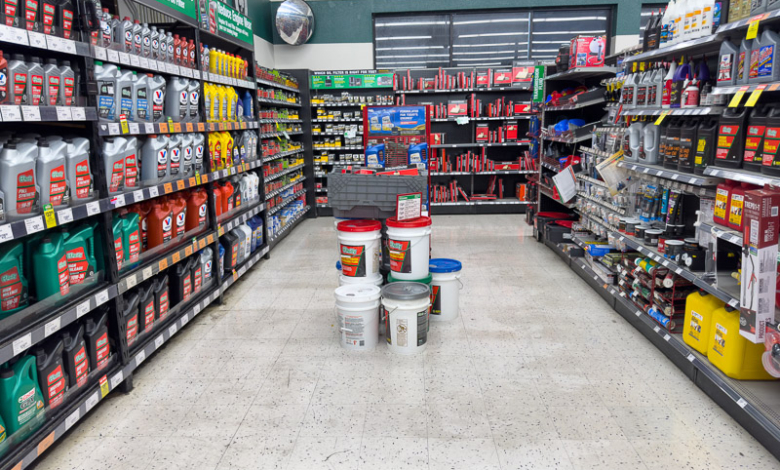
Most of your RV customers require some type of leveling system to ensure that their unit is level and secure in the various locations where they park. Each site requires different level adjustments. Likewise, your parts and accessories inventories could require adjustment to the level of goods depending on the time of year, demand and other factors. Read on to learn more about some of the factors that could impact the stock level of goods in your parts and accessories inventories.
Location of Your RV Business
You might wonder why the location of your RV business might be a factor that impacts the levels of your parts and accessories inventories. If your business is close to a major travel route, the volume of RVs in your location might be different than that of an RV business that is in a seasonal vacation spot. For each of these locations, the volume of parts and accessories that are carried each month should be reflective of the demand for those parts and accessories by your customers.
Is your RV business located in a four-seasons area where weather factors could impact the volume of your parts and accessories inventories?
Let’s clarify my use of volume regarding the level of your parts and accessories inventories. There are two aspects of volume that your parts and accessories manager should consider when deciding on the stock levels in her department. One volume is the total value of the entire parts and accessories inventories, which might be relatively consistent throughout the year due to the budget that has been established. On the other hand, the volume of each item in those inventories could fluctuate depending on the season.
Suppose your RV business is in an area where the winters experience substantial snowfall. Maybe your service manager has a program to contact customers to offer accessory installation specials during these winter months. If the service manager has communicated with the parts and accessories manager, then the level of certain accessories might be increased during this period. And, if this interdepartmental communication is consistent, then the parts and accessories manager might be able to take advantage of any supplier specials that might include cost discounts and/or delayed billing.
Another factor that is related to your location is …
Quantity of RVs in Your Market Area
If there are a large quantity of RV owners that reside in your market area, the level of parts and accessories could reflect this because the walk-in/drive-in traffic of these RV owners might be greater at certain times of the year — especially if many of those owners are not full-timers.
Regardless of the quantity of RVs in your market area, how are you staying in touch with these RV owners? What marketing are you doing to initiate and to maintain contact with these prospective customers?
Do your parts and service managers develop special sales to attract customers, especially in months that historically report less volume of business in the fixed operations departments? And if these specials are centered on specific maintenance and/or installation jobs, have those managers estimated the approximate stock levels of the related parts and accessories and ensured that those levels are on hand during the period of the special?
Let’s not forget that other inventory that could be impacted by a special sale — technician labor hours available. How many of your technicians possess the skill set to perform the maintenance or installation jobs related to the special? This is important so that your repair event cycle time (RECT) can be positively supported.
Since we are talking about …
Interdepartmental Communications
How frequently do the managers of the unit sales, service, and parts and accessories departments communicate to coordinate the flow of business through your RV dealership? And how does this impact the level of parts and accessories inventories?
If an RV is sold and this sale involves the installation of an accessory, has the unit sales agent contacted the parts and accessories manager and the service manager to ensure that each of these departments have the necessary inventory of the accessory and the labor to install that accessory? This is important to ensure that the RV can be delivered to the customer at the agreed-upon date and time. In fact, has the unit sales agent determined the availability of technician time and availability of the accessory in advance of establishing a promise date/time? It is important to deliver on any promises made to a customer so a positive relationship is established and maintained.
The next two factors that could impact the stock level of goods are related to the usage of features that are most likely offered by your dealership management system (DMS).
Stock Status Field in DMS
 Another factor that could impact the stock level of goods in the parts and accessories inventory is the entry that exists in the stock status field of your DMS database. Depending on your DMS, this stock status field might be updated automatically based on the quantity of demand for an item. Or your DMS might require that the parts and accessories manager manually enter the stock status in this field. In either case, it is important that the manager reviews this field to ensure that the correct stock status exists, especially if items are not being suggested for replenishment.
Speaking of demand, are there any …
Demands That Might Be Lost
In this column, the word demand has been mentioned several times. A parts and accessories manager should be aware of every demand for every part and accessory that customers make for any item – whether that item is currently present in the existing inventory or not. This demand information is important so that the manager can decide if an item has achieved sufficient demand to be included in the parts and accessories inventory.
However, experiences in my 50-plus years as a parts manager/director and inventory management consultant have been that not all demand is recorded. Yes, if a sale has been recorded on a counter ticket or a work order, then the DMS considers that when calculating a stock replenishment order. Even if the item has been specially ordered for the customer, then the demand is recorded in the DMS.
But what if the actual sale is not completed? What if the customer decides not to purchase the requested item? Has the parts associate recorded a lost sale in the DMS?
Your parts and accessories manager should train her parts associates to record every demand for every item so that she can decide if the item should be included in the stocked inventory and at what level. To assist your parts personnel in deciding how to qualify a lost sale, here is my eight word definition of a lost sale: Demand, not filled from stock and not ordered.
Before closing this month’s column, I feel that it is important to mention that lost sales are not only important to the parts and accessories manager at your RV business. They are also important to your service manager. If a requested job cannot be scheduled to a customer’s convenience, then a service lost sale should be reported to the service manager. This is very important because it relates to the RECT in your business.
You may have noticed that RECT is a key phrase in the RV industry. In fact, the March 2026 issue of RV PRO contained several interesting columns focused on RECT.
Leveling With You
Please feel welcome to contact me if you have any questions related to this month’s column because I endeavor to share my inventory management experiences and knowledge with you. And that’s on the level!