Upgrading Your RV Water Heater? Here’s When Tankless Makes Sense in 2026
Is an RV tankless water heater upgrade worth it? What should you check before replacing your old tank? Here’s what to know.

Running out of hot water can quickly turn a comfortable RV trip into a rushed routine. One person showers fast, the next waits for the tank to recover, and dishes may have to wait until there is enough hot water again.
For light use, a traditional tank-style RV water heater can still work well. But when you travel with family, take longer trips, or want a more home-like shower experience, its limited stored capacity may start to feel restrictive.
That is when many RV owners begin looking at an RV tankless water heater upgrade. A tankless system heats water on demand instead of relying on a small preheated tank, which can mean longer hot water use and less waiting between showers. The real question is not whether tankless is always better, but whether it fits the way you actually travel.
When a Tankless RV Water Heater Is Worth It
A tankless upgrade makes sense when your current water heater no longer matches your travel style. It can be a good fit if you travel with family, take longer trips, use hot water frequently, or often run out before everyone gets a shower.
It is also worth considering if your tank water heater is aging, slow to recover, or becoming expensive to repair. If you are already replacing the unit, switching to tankless can improve comfort instead of simply installing another small storage tank.
Tankless systems are especially useful at campgrounds with full hookups. With steady water supply and sewer access, you can enjoy longer hot water use without waiting for a tank to reheat.
When a Tank Water Heater May Still Be Enough
Tankless is not always better. If you mostly take short weekend trips, travel alone, use little hot water, or prefer the simplest setup, a traditional tank water heater may still work well.
Boondocking is another factor. A tankless heater can keep making hot water as long as water is flowing, but it does not give you unlimited fresh water or gray water tank capacity. Gray water is the used water from your shower and sinks. If you dry camp often and conserve every gallon, longer showers may not be realistic even with tankless.
Common Tankless Issues to Know
Before upgrading, it helps to understand the common complaints RV owners sometimes have about tankless water heaters: cold bursts, temperature swings, and the heater shutting off when water flow gets too low. These concerns do not apply to every tankless system, but they are worth paying attention to when comparing different models.
Tankless heaters need enough water flow to activate and keep heating. If campground pressure is weak, your RV pump is inconsistent, or your showerhead restricts flow too much, a unit with a higher startup requirement may not perform as smoothly. That is why minimum startup flow matters, especially in real RV conditions where water pressure is not always consistent.
You may also notice a short cold burst after pausing the shower, sometimes called a “cold water sandwich.” This can happen when water flow stops, the burner shuts off, and cooler water moves through the line before the heater stabilizes again.
The takeaway is not that tankless water heaters are unreliable. It is that design details matter. When choosing an RV tankless water heater, look beyond maximum GPM and check whether the unit is built for low-flow startup, steady temperature control, and smoother water mixing.
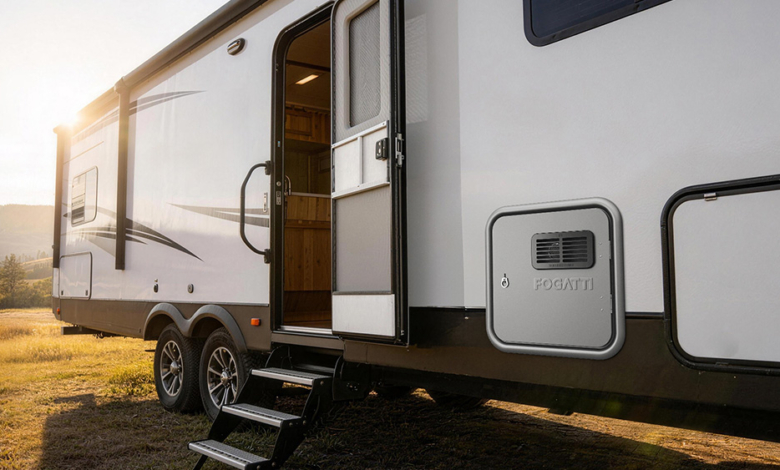
For RV owners upgrading mainly to improve shower comfort, those details should be part of the buying criteria. The FOGATTI InstaShower Ultra features a 0.5 GPM startup flow, a built-in mixing tank, and precise temperature control, making it worth comparing for shoppers who want steadier hot water under real RV conditions rather than simply higher peak output.
Gas vs. Electric for RV Use
For most RV shower upgrades, propane tankless water heaters are the more practical choice. Many RVs already use LP propane, and propane provides the heating power needed for on-demand hot water at shower-level flow.
Electric tankless heaters may sound convenient, but they can require a lot of power. Many RV electrical systems, especially 30-amp setups, may not have enough capacity to run a high-output electric tankless heater while also powering air conditioning, appliances, chargers, and other devices. Electric or hybrid tank water heaters can still be useful on shore power, but for stronger on-demand shower use, propane tankless is usually the more realistic upgrade path.
GPM, BTU, and Temperature Rise
Do not choose a tankless RV water heater based only on the highest GPM or BTU number. GPM means gallons per minute. BTU measures heating power. Temperature rise is the difference between incoming water temperature and your desired hot water temperature.
If campground water is cold, the heater must work harder to reach a comfortable shower temperature. In colder weather, you may need to reduce flow slightly to keep the water hot.
Higher-demand situations, such as family trips, longer showers, and frequent hot water use, are where output capacity becomes more important. With 66,000 BTU heating performance and up to 3.9 GPM flow, the InstaShower Ultra is designed for owners who need more hot water capacity than a small storage tank can provide.
Fit, Venting, and Cold-Weather Checks
Before replacing your old water heater, measure your current opening size, exterior door size, cabinet depth, LP gas line, water connections, 12V wiring, and drain access.
Fitment can decide whether an upgrade is simple or frustrating. A tankless unit may have the right heating capacity, but it still needs to match your RV’s existing cutout, wall space, access door, and plumbing layout. Check installation dimensions carefully before ordering.
Propane tankless heaters also need proper air intake and exhaust, so the exterior vent area must follow the manufacturer’s instructions. Nearby windows, doors, awnings, slide-outs, or storage compartments may affect whether the location is suitable. If the upgrade requires gas line, wiring, plumbing, or exterior trim changes, use a qualified RV technician.
Freeze protection can be helpful in cold weather, but it does not replace proper winterization. If your RV is stored, unplugged, out of propane, or exposed to freezing temperatures for a long period, the water heater and plumbing may still need to be drained and winterized.
Final Verdict
A tankless RV water heater upgrade is worth it if your old tank system limits your comfort. If you want longer showers, less recovery time, and better back-to-back use, tankless can be a valuable upgrade.
But the right choice depends on how you travel. Check your water habits, gas and power setup, GPM, BTU, low-flow activation, venting, winterization needs, and replacement fit before buying.
Once you’re ready to upgrade your RV water heater, FOGATTI is worth a closer look. Built around real RV travel needs, its hot water solutions are designed for dependable performance, practical replacement options, and everyday comfort on the road.