Sustainability as a Guiding Principle
Terry Magid, executive director of Global Enterprise Risk at Cummins, stresses the importance of integrating sustainability, ESG strategy and community impact into core business practices.

At many companies, sustainability lives in a single department or annual report. Cummins embeds sustainability across the entire company, from product innovation and emissions reduction to community engagement and risk strategy.
The company’s most recent Sustainability Progress Report underscores that integration, highlighting record financial performance alongside measurable progress on environmental and social goals. In 2023, Cummins reported $31.4 billion in revenue while advancing its decarbonization roadmap, known as Destination Zero, and achieving a 31% reduction in Scope 1 and 2 greenhouse gas emissions from facilities and operations.
The report also points to broad global impact. Initiatives like Cummins Water Works have generated billions of gallons in water benefits for communities, while employee-led programs have driven large-scale volunteer engagement and community investment. The company has also emphasized the role of diversity and inclusion in innovation and long-term performance; priorities that leadership says are deeply tied to business resilience.
Terry Magid, executive director of Global Enterprise Risk, says these outcomes reflect what the company describes as “mission in action,” a philosophy that connects sustainability, risk management and long-term strategy.
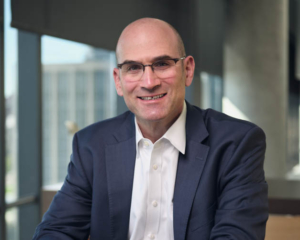
In an era defined by climate uncertainty, evolving regulations and rising stakeholder expectations, Magid’s role sits at the intersection of transparency and accountability, helping translate big-picture commitments into measurable progress.
RV PRO spoke with Magid about how Cummins approaches sustainability reporting, why transparency matters more than ever and how initiatives like Destination Zero are shaping the company’s future while influencing broader industries, including mobility and manufacturing.
Q: Cummins defines sustainability as “mission in action.” What does that look like in practice across the company?
Magid: To achieve Cummins’ mission of making people’s lives better by powering a more prosperous world, it requires the company to play a key role in nurturing a healthier planet, vibrant communities and engaged citizens. We see this unfold by:
Significantly reducing emissions from our products and operations. Over the past few decades, we have reduced nitrogen oxide and particulate matter emissions from our products by 95% in the U.S. and 90% globally. In fact, 60 Class 8 semitrucks today emit what one emitted in 1988.
Contributing to the health and vibrancy of the communities in which our employees live and work. In 2024, over 57,000 Cummins employees volunteered 340,479 hours, organizing 11,322 community events and partnering with over 3,000 nonprofit organizations around the world. Coupled with a record $49.6 million in community giving, Cummins’ focus on large-scale community initiatives and strategic global programs continues to increase our overall impact and improve the health of the communities in which we operate.
Fostering inclusive environments in and outside of Cummins. Our company is at its best when everyone is safe, included and connected to our purpose. We remain committed to equipping employees with the training and resources needed as our industry evolves.
Q: What key metrics or indicators does Cummins track to measure Environmental, Social & Governance (ESG) progress?
Magid: Cummins tracks metrics such as greenhouse gas emissions, energy use, water and waste performance, workforce diversity and engagement, health and safety indicators, and governance measures like ethics, compliance and risk oversight. We report these in our Sustainability Progress Report and other voluntary frameworks such as Carbon Disclosure Project (CDP).
Q: Why is transparent sustainability reporting so important today for employees and external stakeholders?
Magid: Transparency is a key factor in maintaining accountability for our sustainability strategy, initiatives and outcomes. It helps build trust, demonstrate progress credibly and empower employees and external stakeholders to understand how their actions contribute to long-term impact.
Transparent reporting enables employees to see the results of their work and feel connected to the company’s purpose, while external stakeholders gain the clarity they need to assess performance and evaluate how commitments translate into measurable results.
Q: How do you decide which sustainability initiatives to prioritize & measure across a global organization?
Magid: Cummins uses a materiality assessment, which plays a critical role in shaping our strategy by providing a comprehensive understanding of financial and nonfinancial impacts, risks and opportunities. The reporting team leverages this information to identify the topics included in our annual Sustainability Progress Report.
Q: How does Cummins ensure sustainability goals aren’t siloed across business units?
Magid: Sustainability is not new to Cummins. Well before “ESG” entered the general lexicon, sustainability, including the company’s efforts related to ESG issues, has been critical to Cummins’ long-term business and growth strategies. Since the 1970s, Cummins has focused on producing engines that reduce environmental impact, supporting more prosperous communities, and embracing diversity and inclusion among its values. With these principles embedded across the company, Cummins’ ESG strategy is its business strategy.
At Cummins, our business and environmental strategies are intentionally and intricately aligned to capture the growth opportunity decarbonization presents through Destination Zero, which is our commitment to sustainability and helping our customers navigate the energy transition.
Q: Programs like Cummins Water Works, Powers Women & CARE demonstrate social impact. How do they reflect the company’s philosophy?
Magid: We believe in the inherent social responsibility of companies in society. This is not only the right thing to do, but a business imperative. We believe that our long-term survival is as dependent on responsible corporate citizenship as it is on responsible financial performance and maximizing returns to our shareholders.
Investing in our global communities has long been an important objective for Cummins, a vision that started with our former chairman and CEO, J. Irwin Miller. Our dedication to responsible citizenship has been reinforced by every successive Cummins leader, and our efforts to make the communities in which our employees live and work strong and equitable is as vital as ever.
Q: How does employee-led engagement amplify Cummins’ sustainability & social initiatives?
Magid: Our corporate responsibility work aims to build more prosperous communities and inspire our employees. Around the world, our employees identify local community needs and volunteer in teams to meet those needs. Engagement is the underpinning of our responsibility to our communities — employees around the globe using their skills to make their communities better. Cummins employees are deeply committed to the prosperity of the cities, towns and villages where they live and work. We aim to use our global footprint and the strength of our employees’ skills to achieve impact and results.
Employees engage through a network of over 400 Community Involvement Teams (CITs) around the world. These teams are supported by a company with a deeply rooted history of community problem-solving. As such, our employees have significant flexibility to craft community solutions with an array of nonprofits they select and projects they fund with Cummins Community Development Grants.
Q: In what ways does the health of communities influence business strategy & decision-making?
Magid: Our Destination Zero strategy is our business growth strategy, leading the industries in which we compete through the transformational changes required for achieving zero-emissions solutions. Our business and moral responsibility is to ensure that all our industries and customers, and our global communities, can make the transition toward a healthier planet in a manner that makes the most sense to them.
The alignment between community strategies and business strategy is crucial for success in both areas. Ensuring Cummins communities are strong, resilient and prepared directly influences our business strategy. Healthy communities support a skilled workforce, strengthen our license to operate, and enable long-term economic and environmental stability.
Q: Cummins has emphasized that diversity & inclusion drive innovation. How does that connect to sustainability?
Magid: Our commitment to diversity and inclusion dates back nearly three-quarters of a century and remains a strategic advantage. By harnessing the strengths of our global workforce, we accelerate innovation, deliver strong results and create exceptional solutions for customers and communities worldwide.
Q: As sustainability becomes more critical across industries, what challenges does Cummins face in meeting ESG targets?
Magid: It is clear the energy transition is going to be even more dynamic, uncertain and divergent than we ever thought it would be. It is also clear that our Destination Zero strategy is the right one to lead our industry, customers and partners into the next era of smarter, cleaner power.
 While uncertainty exists regarding the role regulations, incentives and trade policy will play in the future of our industry, we continue to invest billions of dollars to innovate and develop technologies that are cleaner, more advanced and more efficient than ever before.
We are equally focused on the solutions we can deliver today that make an immediate impact in reducing emissions and the technologies of tomorrow that will drive us to zero emissions.
We acknowledge that progress toward this goal is impacted by pacing factors, such as infrastructure readiness, customer adoption and regulatory uncertainty, which slow the rate of lower-emissions technology adoption. Cummins is committed to addressing climate change and reducing air emissions through its decarbonization efforts.
Q: Looking ahead, what aspirational goals does Cummins have over the next three to five years?
Magid: Cummins’ business and sustainability strategies are intentionally and intricately aligned through Destination Zero — the company’s commitment to sustainability and helping customers navigate the energy transition. This strategy builds on Cummins’ long-standing commitment to environmental sustainability, with focused efforts on three priority areas: decarbonization, materials and communities.
Cummins’ 2030 goals and 2050 targets for climate change encompass Scope 1, 2 and 3 emissions, which include its facilities and operations (Scope 1 and Scope 2), products (Scope 3) and procurement (Scope 3). Cummins near-term 2030 GHG reduction goals for facilities and operations and products are approved by the Science Based Target Initiative (SBTi).
Cummins sets ambitious long-term goals to guide our direction, recognizing that clearly articulated guideposts help us stay focused on continuous progress while adapting our strategy along the way. Details and annual progress are available in our sustainability progress report and Climate Transition Plan documents.
Q: How do you hope Cummins’ approach to sustainability will inspire others in mobility & manufacturing, including the RV industry?
Magid: People who love their RVs also love spending time outdoors — whether that’s exploring national parks, visiting campsites with family or simply enjoying the open road. We understand that RV owners care about protecting the places they travel to. Cummins’ commitment to communities and the environment reflects those same values. We invest in our people and operate with a focus on responsibility, innovation and long-term sustainability.
We also recognize that for RV manufacturers and owners alike, the priority is equipment that works reliably, safely and with the power to get them where they want to go. That’s why we’re focused on delivering engines and technologies that meet customers’ real-world needs while also advancing toward lower-emissions solutions over time.
Our Climate Transition Plan is designed to guide how we move forward and to support customers and partners navigating similar challenges.
Meaningful progress will take collaboration across society, including supportive policies, continued energy infrastructure development and customer readiness for innovative technologies as they become practical and accessible.
Looking Ahead
As industries grapple with decarbonization and evolving stakeholder expectations, Cummins’ approach highlights the growing importance of embedding sustainability into business strategy rather than treating it as an adjacent effort.
This integration also demands transparency, disciplined measurement and a willingness to adapt amid uncertainty.
Whether through Destination Zero, expanded ESG reporting or employee-led community engagement, Cummins’ strategy reflects a broader shift across manufacturing and mobility, and, as the company has clearly found with its “mission in action,” sustainability is becoming what drives resilience, innovation and long-term growth. As Magid emphasizes, meaningful progress will ultimately depend on collaboration across industries, governments and communities alike.