Battery technology is changing fast. For people exploring solar and off-grid power systems, that is good news. The right battery determines how long you can power your RV, cabin or home and how safely you can do it, Renogy said in a recent release.
Two next-generation technologies are leading the conversation today: sodium-ion (Na-ion) and semi solid-state (SSS) batteries. Each brings its own advantages, but they serve different roles in the evolving clean energy landscape.
Renogy established its foundation over 12 years ago as an authority in off-grid energy, so its engineers are tracking sodium-ion and all other developing energy storage technologies. At the same time, Renogy’s semi solid-state battery technology is built for people who value long-lasting power, robust safety and proven reliability in real-world use, the company said.
Energy Density: More Power, Less Weight
When it comes to off-grid and mobile solar systems, energy density — how much energy a battery stores per pound — is key.
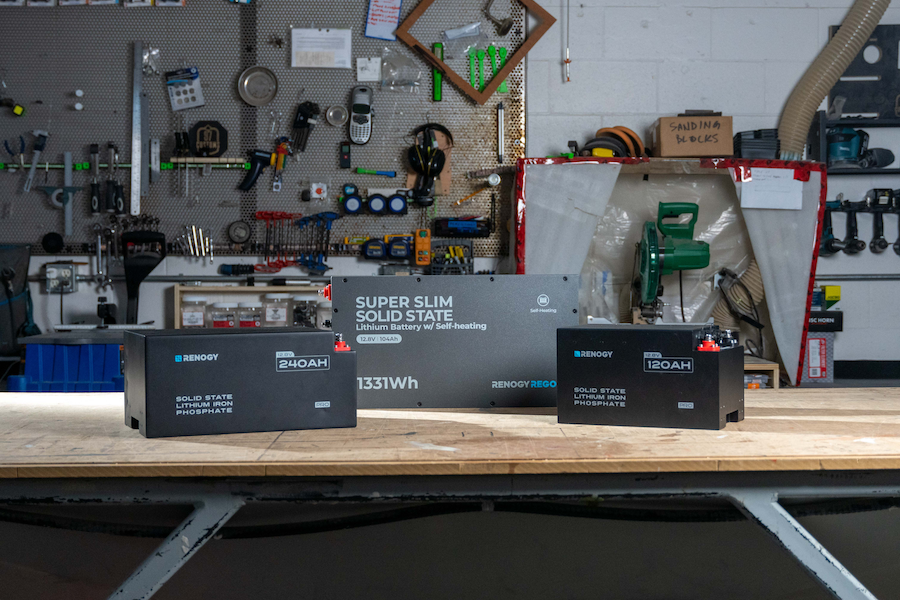
Sodium-ion batteries are affordable and environmentally friendly but offer lower energy density. That means more weight and space for the same energy, making them better suited for stationary energy storage than for mobile setups. Semi solid-state batteries take the lead in energy density, Renogy said. Their advanced chemistry stores far more power within the same footprint, offering lighter systems with longer runtimes.
Why does it matter? For RV solar power off-grid systems, mobile power stations and portable energy setups, semi solid-state batteries mean more flexibility, less bulk and a higher degree of independence from the grid.
Safety: Designed for Peace of Mind
Every battery user wants peace of mind, especially when energy storage hardware lives indoors or travels across rough terrain.
Sodium-ion batteries are stable and handle cold temperatures better than conventional lithium-ion batteries. Semi solid-state batteries go a step further, Renogy said. By replacing most of the liquid electrolytes in a traditional battery design with solid materials, they greatly reduce the risk of leaks, short circuits, or fires.
In practical terms, semi solid-state batteries offer an inherently safer architecture, making them ideal for families and adventurers who want dependable, low-risk energy wherever life takes them.
Lifespan: Fewer Replacements, Long-Term Reliability
Battery longevity determines how much value you really get over time. Sodium-ion batteries offer solid durability, often lasting around 3,000 to 5,000 charge cycles. Semi solid-state batteries extend that life even further, with enhanced chemical stability that maintains performance over thousands of deep discharges.
That extended lifespan reduces waste, replacement costs and downtime, a critical factor for solar energy storage systems in remote or off-grid settings.
Cost and Value: What You Pay vs. What You Get
While sodium-ion batteries currently win on upfront price, they also deliver lower performance per pound. For casual or stationary applications, that trade-off can make sense.
But for users who need compact, robust and long-lasting power, from RV solar setups to portable power stations, semi solid-state batteries deliver better lifetime value, Renogy said. Their efficiency, longevity and superior energy density make them a strong investment for anyone serious about sustainable energy independence.
Looking Ahead: The Road to Solid-State
The battery industry is evolving toward more sustainable and more powerful solutions. Sodium-ion battery technology will likely grow in grid-scale and stationary use due to its affordability and the wide availability of raw materials.
However, semi solid-state batteries and their fully solid-state successors are leading the charge for mobile and high-performance power systems, Renogy said. By combining innovation with dependability, Renogy’s semi solid-state design offers customers the best of both worlds today while laying the foundation for tomorrow’s breakthroughs.
“Our semi solid-state platform reflects Renogy’s commitment to practical, dependable energy solutions,” said Tiffany Dorin, VP and head of operations, Renogy North America. “We see this as the bridge to the next generation of solid-state energy.”
Why Renogy’s Semi Solid-State Batteries Lead the Way
Renogy’s engineering team has refined a 90% solid electrolyte architecture, enabling higher safety, strong performance and better scalability than full solid-state systems currently in development, the company said. This makes Renogy batteries a reliable choice for:
- RV and van life enthusiasts who need compact, high-power energy
- Homeowners seeking safer solar battery storage systems
- Off-grid explorers looking for dependable, maintenance-free power
By focusing on scalable innovation, Renogy said it continues to lead the off-grid energy transition with technology designed for real-world performance, not just lab potential.
Bottom line: Sodium-ion may reshape the future of large-scale storage, but for on-the-go power, solar integration and mobile applications, semi solid-state batteries stand out as one of the most advanced, durable and reliable options available today.