EarthCruiser has been watching a shift in the overland industry for years: more families, photographers, guides, researchers and commercial operators are heading farther afield for longer periods of time. The overland industry has become remarkably good at helping two people travel. Vans, truck campers and expedition vehicles have evolved, delivering greater comfort, capability and self-sufficiency. Yet more people require more space. More space requires more carrying capacity. More carrying capacity requires a platform designed for the job.
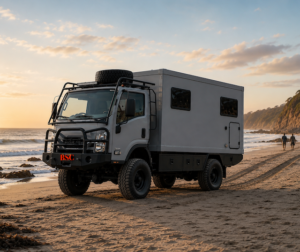
As passenger numbers, payload requirements and trip duration increase, the compromises associated with any vehicle platform become more apparent. The result is a growing number of customers looking for a platform that can transport multiple occupants, carry substantial payload and still provide dedicated living space for extended travel, EarthCruiser said.
That thinking led to the development of EarthCruiser’s CORE dual-cab platform. Today, through EarthCruiser’s partnership with Overland Van Project (OVP), that same approach is available in the EarthCruiser BSC. While customer deliveries are still ahead, early customer interest has strongly favored the dual-cab configuration, the company said.
“We’re seeing it across families, photographers, guides, researchers and commercial users,” said EarthCruiser founder Lance Gillies. “People are spending more time on the road, carrying more equipment and traveling with more passengers. Eventually the conversation shifts from where people are going to sleep to how they’re going to travel.”
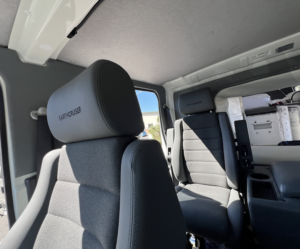 The dual-cab EarthCruiser BSC by OVP provides four full vehicle doors, forward-facing passenger seating, factory-engineered seating positions and OEM restraint systems. Forward-facing seating, proper restraint systems and direct access through full vehicle doors are not simply comfort features, EarthCruiser said. They are the foundations upon which modern passenger safety standards, child-restraint systems and occupant protection requirements have been built.
A recent comparative review of passenger safety regulations and standards across the United States, Europe and Australia concluded that “forward-facing travel seats with proper three-point belts and approved child-restraint anchorage locations are strongly preferable.” The same review identified side-facing bench seating as “the weakest recurring risk point in campervan conversions.” Those findings are consistent with the direction of modern occupant protection standards. In the United States, FMVSS 225 governs child restraint anchorage systems and structures its rear-seat anchorage requirements around forward-facing rear designated seating positions.
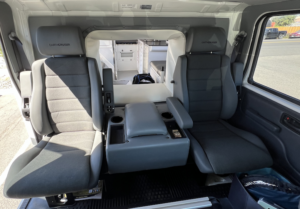 EarthCruiser’s use of forward-facing travel seats aligns with the regulatory architecture used for modern child restraint anchorage systems, tether anchorages and child occupant protection, the company said. For EarthCruiser, those findings reinforce decisions that were already built into the CORE platform architecture: passengers should travel in forward-facing seats designed for travel, not in seating arrangements adapted from living spaces.
Built on the EarthCruiser CORE platform and crafted by Overland Van Project, the BSC dual-cab delivers off-road capability, substantial carrying capacity and dedicated living accommodations without forcing customers to choose between passengers, payload and practicality.
Technical References
The passenger safety findings referenced in this release are drawn from a comparative review of vehicle seating, restraint systems and child-occupant protection standards across the United States, Europe and Australia, EarthCruiser said.