Fleetwood’s Fresh Perspective
A reimagined Class C lineup introduces customers to Fleetwood’s RVs, capitalizing on a desire for affordability, maneuverability and flexible floorplans.
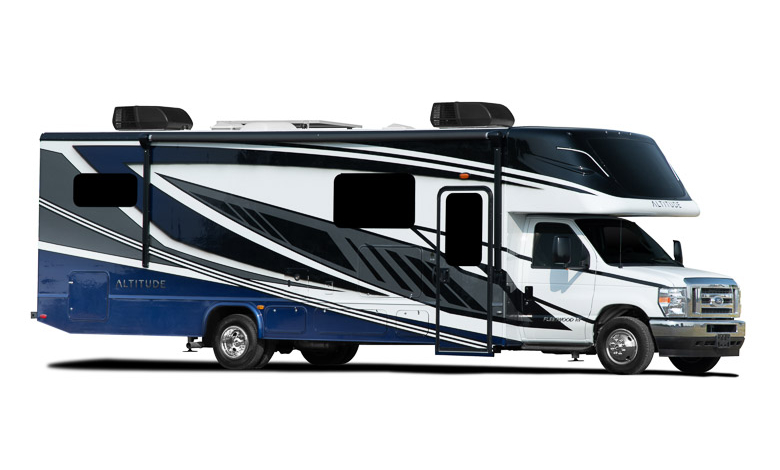
The Class C segment is not new for Fleetwood, but its new Class C lineup is an updated take on old excellence. After shifting focus to their Class A lineup for several years, they’ve reentered the Class C segment, bringing innovation and a fresh perspective to their offerings.
“Back in the day, Fleetwood was very well known for their Jamboree. It ruled the roost when it came to Class Cs. In the boom of Class Cs, we were right in the thick of it. After a while, we deviated and focused more on the Class A business,” says Doug Miller, sales and product manager for Fleetwood, Holiday Rambler and American Coach.
Miller says over the course of the last six or seven years, the OEM identified through research that it wasn’t providing a great path for customers to get into a Class A. By offering a newly reimagined Class C lineup, it gets customers introduced to the Fleetwood lifestyle.
“It gets branding around their head as they migrate through the RV life cycle. They hit our Class As next. We know how to build Class Cs and didn’t have any fears. We brought that back to get into that space,” Miller says.
With that in mind, Miller says they introduced the Altitude and Insight Class Cs because the company is climbing.
“We’re getting back into consumer driveways, campgrounds and tailgates. We chose not to go with the Jamboree and Tioga names because they’ve been used in the past and we want to look forward to the future.”
Fleetwood offers products in both the Class C and Super C segments. In Class C, they have the 2026 Insight (diesel) and the 2026 Altitude (gas). The Super C lineup includes the 2026 Altitude FS600D (diesel) and 2026 Altitude FS550 (gas).
Inside the Innovation
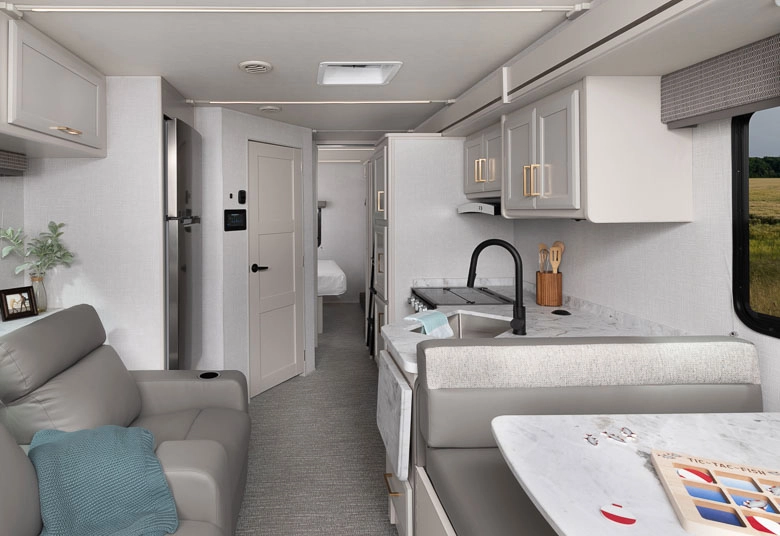
In designing its Class Cs, Miller says they took some of the most popular floorplan products they were seeing in Class Cs and found out ways they could make them bigger or better.
“Most Class C motorhomes have narrow entry doors. Trying to carry things in and out, the narrow entry way prohibits you. We tend to use larger doors on a Class A than a Class C. We thought, ‘Let’s change that.’”
So they put in an enhanced radiused entry door for increased accessibility and security. The next area they identified for improvement were the entry steps.
“We noticed entry steps can be kind of clunky and sit lower to the ground so they pick up more debris from the road. So we got rid of the step. We made our entry lower so it’s easier to get into and out of and makes a lot of sense. We tried to find the most interesting things that stand out.”
Looking from the outside in, Fleetwood addressed the front cap appearance next.
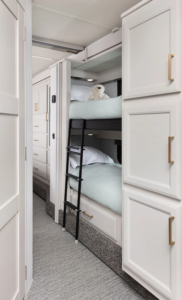
“We partnered with Goldshield Fiberglass and had a large windshield made since that front cap is really the first thing you see. We wanted to make sure we had a powerful statement that said, ‘Here I am. Come look at me.’ We have one of the largest upper cab bunk areas with a power shade that comes down, surface chargers and a large sleeping area that’s comfortable for adults and kids,” Miller says.
Regardless of who’s using the bunk, Miller says they wanted a fabric that could stand up to kids, dogs, cats and the adults who might use it. That’s why they teamed up with Revolution Performance Fabrics to provide an improved fabric for their bunk that’s easy to clean and maintain and be comfortable.
“It’s darn near bulletproof,” Miller says. “The end result for the consumer is they don’t have to replace this component we put in as a manufacturer.”
Inside the Class C, Miller says they looked at shower size.
“Inside a Class C, typically your box is smaller and you don’t have as much space. So we researched and kind of leaned on our Class A mentality. We took that concept and provided a bigger shower.”
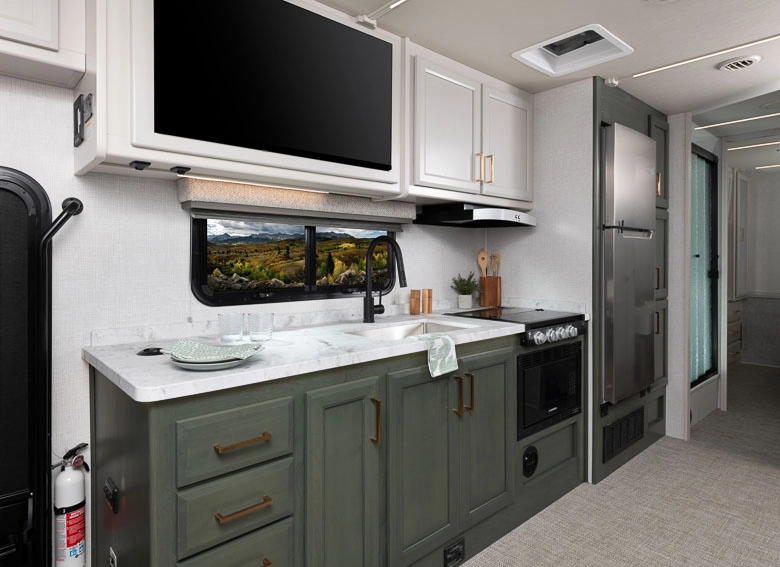
Fleetwood Altitude gas units also offer an exclusive powerlock system, premium full-body paint and Roto-Cast molded and citadel-lined luggage bays. The Roto-Cast molded luggage bays are easier to clean and more resilient than traditional plywood compartments. Inside, there are options for all, from spacious dinettes to multiple sleeping arrangements.
“We just started checking boxes. We’re conscientious of price, but that can’t be our only staple we lean on. We provide a good product. We want it to stand up and make sure they enjoy it for a long time.”
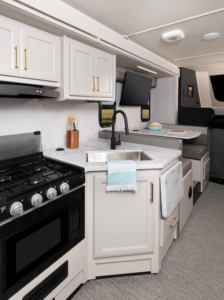
Construction using premium Tuff Coat vacu-bonded sidewalls and a Tuff-Ply thermal polyolefin composite roof offers long-lasting durability and protection. High-performance frameless radius corner windows add a sleek exterior look.
Miller says they added the DX4 Package, with best-in-class anti-dive control to combat the common complaint of difficult handling across Class C products and provide a smoother, more stable ride.
The Fleetwood Insight includes the Mercedes-Benz suite of safety features for added driving confidence and security. It also features stainless steel luggage door framing, composite fiberglass sidewalls and a fiberglass roof to enhance corrosion resistance, longevity and exterior quality.
In the Super C series, Miller says they’re doing something different by offering a gas version of their Super C diesel.
“Something new we’re doing is the F550 but using a gas version instead of diesel. We’ve created a shorter F-series type motorhome and are in a different price point than the consumer that has to have a diesel. It’s for the person who likes the profile but not the price point of a diesel. We can attack that by not having a diesel. We strive to build more and better floorplans going out. It complements our diesel offering and longer floorplans. We are venturing out and trying to find pockets of where it may make sense to a consumer to have one.”
Looking Ahead
Miller says he anticipates steady demand in the Class C segment as buyers continue prioritizing drivability, durability, safety features, flexible floorplans and upscale comfort.
“Affordability is probably one of the things driving demand for Class Cs. They’re easier to jump in and out of. They’re a little bit more flexible, nimble and affordable. There are less people who can spend the type of money it takes to get into a Class A.”
With both first-time buyers and experienced RVers seeking maneuverability without sacrificing amenities, demand for more floorplans and configurations will continue to grow.
Fleetwood has met this challenge head on and continues to fulfill that demand for flexible floorplans and better storage solutions. Miller says Fleetwood’s products have garnered positive feedback.
“Our Class C products have been received very well. The biggest proof is when you get the consumer behind the wheel and let them take it off the lot,” Miller says.
“The Class C segment isn’t going any place. It has been and remains one of the strongest in the RV market for a long time.”