Increase RV Parts Sales With Point-of-Purchase Displays
Strategic P.O.P. displays boost revenue and help customers discover the products they need.

As you are reading this issue of RV PRO, think back to your personal plans that you had to welcome in the new year. Those plans might have included dressing to the nines as you celebrated the arrival of another year.
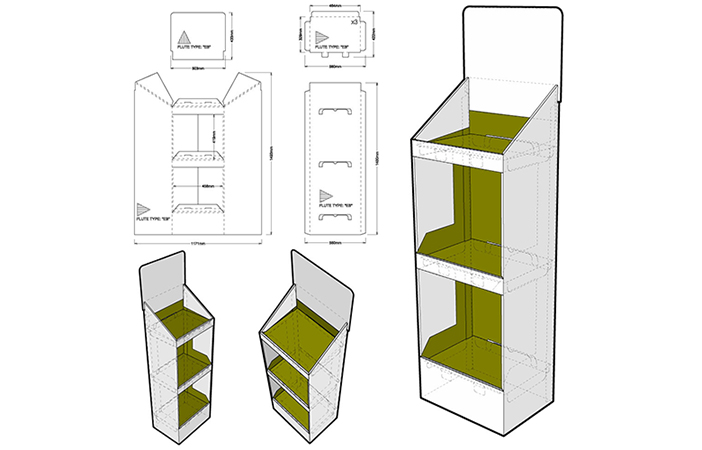
Regarding your business plans for 2026, perhaps you might also want to dress up your surroundings and decide to refresh your retail showroom, which could include adding some P.O.P. (point of purchase) displays.
Point of Purchase, Defined
I am defining P.O.P. displays in a literal sense, which is any display features that could encourage the customer to purchase an item from the display or that is related to the display; and which might not require the assistance of a parts associate.
You might recall a line from the motion picture “A Field of Dreams”: “If you build it, they will come.”
This line could be applied to your P.O.P. displays, with the added phrase: “But will they buy?”
In this month’s column, I have provided some thoughts on point-of-purchase displays and their contents that might encourage your shoppers to purchase those displayed items.
As noted in the following sections, these suggestions could include supplier-provided displays, in-store developed displays, maintenance reminders and suggestive selling signage such as: “Customers who bought this widget also purchased this whatchamacallit.”
Supplier-Provided P.O.P.
Some of you might have recently attended a supplier show where you could have learned about new accessories. Perhaps you have ordered some of these accessories and were offered a P.O.P. display for your showroom. How much did the display cost? Or was it free, if you purchased a minimum amount (dollars or units) of the accessory(ies)? Regardless of the cost, it is important that this P.O.P. display be placed where it will be viewed by as many customers as possible.
How will you track the P.O.P.-ularity of this display? Will your parts associates ask each customer if they have seen what is included in the display? Will your parts associates offer to accompany a customer to the display if the customer expresses an interest in the product(s)? If the display doesn’t seem to be attracting customers, will you discuss this with your parts associates to determine how to increase customer interest in the display?
These questions are important because I am assuming that you have purchased the accessories that are being marketed in the P.O.P. display and that you want to sell these accessories to justify your decision to purchase them. Here are some ideas to draw attention to these products.
In-Store Developed Displays
These have minimal cost associated with them; however, they should be tracked to determine if the products are being shopped and purchased. This tracking could be done with a dealership management system (DMS) report of the items in that bin location — assuming you have assigned a bin location to the display fixture(s) or area(s). By creating a report of sales by piece for this specific bin location, you can easily determine the sales volume of these items, and take appropriate action if those sales are not sufficient. This same tracking method could also be used for supplier-provided P.O.P.
I mentioned the use of bin locations, and I suggest that you have an effective bin location system so that your parts associates can place and retrieve the parts and accessories efficiently. If you are interested in my thoughts on bin locations, you might refer to my column in the April 2020 issue of RV PRO.
Sources for P.O.P.-ular Displays
In his book “Future Shock,” Alvin Toffler coined the term prosumer, which states that we are each producers and consumers. When you are acting as a consumer, perhaps you might notice a display that catches your attention. Take a photo of it. Make some notes regarding what caught your attention or what aspects/features of the P.O.P. display assist you in making the decision to purchase the item.
After returning to your RV business, discuss the P.O.P. display with your associates to determine if any of the features could be adapted for use in your displays. During the discussion, you could solicit ideas for other features that could be included in your P.O.P. displays.
Maintenance Reminders
I tend to make a shopping list prior to visiting retail businesses. However, some of your customers may not have a list of stuff they plan to purchase. Why not provide them with lists of items that are related to the different reasons that have brought them into your RV business? These shopping lists could be developed for various functions of RVs or the RV lifestyle, such as:
- wastewater related goods and equipment
- exterior and interior cleaning supplies
- storage equipment and accessories for the interior and exterior storage areas of an RV
- trip preparation shopping lists
- winterization materials and processes
- campsite specific gear for leveling your rig and enjoying end-of-day activities
These shopping lists could be placed in the appropriate displays and also located at the parts associates’ workstations. Speaking of parts associates, what about …
Silent Sales Associates (SSA)
An effective P.O.P. display employs SSAs in the form of:
- application charts that might suggest the quantity of an item based on the customer’s RV size (i.e., two bottles for a 20-gallon black water tank)
- a pad of how-to tear-offs or references to YouTube videos on how to install an accessory
- placement of related items in adjacent display fixtures
- signage directing the customer to the adjacent displays
- pricing that includes installation charges and the amount of time required for installation if the customer wants to have the item installed
These SSAs could increase your gross sales without increasing your personnel expenses.
How To Make Your P.O.P.s ETDBW
During the early 1990s, I was contracted by Harley-Davidson to develop and facilitate workshops for their Harley-Davidson University. When not facilitating my workshop, I attended other presentations, one of which was given by Roger Dow, who introduced the term ETDBW (easy to do business with) in reference to serving customers. Roger suggested that the easier you make it for customers to do business with your company, the greater the opportunity that you will be the supplier/merchant of choice when they are shopping for products/services that you offer.
As part of your P.O.P. planning, assume the role of the customer and see how easy it is to use your P.O.P. displays. Do the P.O.P. displays make it easy for the customer to decide to purchase the items in the display? Can the customer usually make that purchase decision without the assistance of a parts associate?
As with many of the topics of my columns, these P.O.P. display setups and maintenance could require some effort by you and your associates. But would you prefer to put in the effort and see positive results, or be out of work because the sales volume is down?