“Less is more” is the mantra of upscale retail businesses that attract and sell to customers in the higher income brackets. Years ago, I ghostwrote the visual standards manual for Saks Fifth Avenue. I bumped into their visual team at a trade show a few years ago, and their corporate director of visual merchandising told me that almost everything I wrote is still in practice 30 years later. Standards don’t change over time; only the merchandise and fixtures do.
According to the RV Industry Association’s 2025 RV Owner Demographic Profile, about 34% of the people buying RVs have an income of over $100,000 a year. Many earn well over that amount. In addition, 43% of purchasers earn an upper-middle income, which is $50,000 to $100,000 a year. Only 23% of buyers are in the in $50,000 and under income bracket. That means at least 77% of your customers are shopping at stores with higher priced merchandise and are exposed or influenced by the “less is more” style of merchandising of pricier products.
Thanks to our current inflation and anxiety about U.S. and global relations, many people are looking toward discount and low-priced big box stores to save on daily costs. But they still aspire to upscale merchandise.
“Space equals cost” is another major tenet in upscale retail. Customers innately know that if there is less crowding, the merchandise they are seeing is probably more costly. It’s simple math. But there is a fine line between more space and looking low on stock. It’s what you do with the “empty” space that can intrigue and entice your customers (or not).
Lifestyle stores such as RH (Restoration Hardware), Terrain, Pottery Barn, Williams Sonoma and Crate & Barrel separate out their more expensive lines by creating more visual and aisle space. It doesn’t have to be a lot of space, just enough to say, “this is special.”
“According to a 2025 report from research firm Moody’s Analytics, the top 10% of U.S. earners (with household incomes of $250,000 and up) now account for almost 50% of all spending; 30 years ago, they accounted for 36%,” Fast Company reported last year.
Here are some ideas on how you can separate and display your more upscale models and other merchandise to attract this customer base.
Placement
In our Western culture, people read a store like a book from left to right and then follow their noses to the right. If you place your more expensive RVs and merchandise toward the right side of your showroom, people will tend to walk in that direction first. This works best if your front door is in the middle of the storefront or slightly to the left or right.
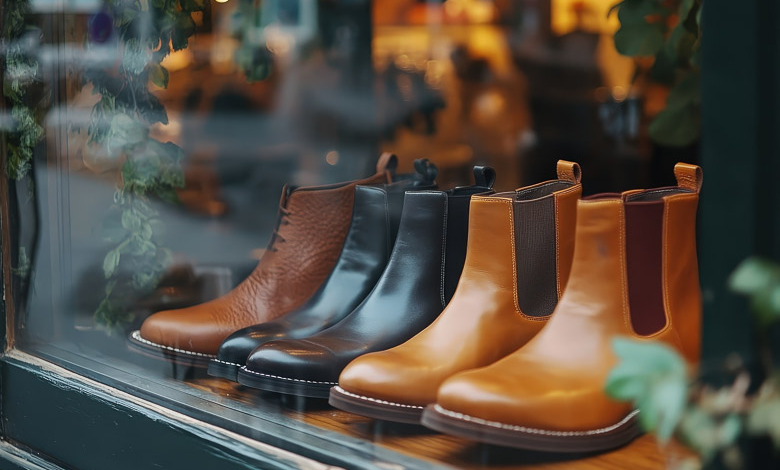
I consulted for Danner Boots in Oregon at a new store they opened in Hillsboro. Their new boots weren’t selling as well as their sale boots. The new boots were to the left of the front door on the wood wall and on wood units that were perpendicular to the wall. The sale boots were on freestanding metal A-frame units perpendicular to a window wall. People came in, looked from left to right and walked over to the sale boots — and the light. I suggested that they switch their merchandise, and their new boot sales, now on the right side of the store, went up considerably within a day of making the change. Look at your store layout and notice how people walk as they enter your showroom. If your front door opens to the far-right side of your showroom, people will gravitate to the left as they will see what’s there better than what’s right in front of them. In that case, center your upscale products so they are the first things people notice as they enter.
If you have some sitting areas for talking with customers, those can go in the dead zones — the front and back corners of the showroom — depending on where your stockroom doors are located. Of course, these should be attractive areas with desk lights and all chairs having arms for customers who need them. Desk lights need warm bulbs to throw a soft yellowish light as that strengthens the connection between people and adds some serotonin to the brain, making people more receptive. If there is no outlet nearby, research rechargeable battery restaurant lighting. Consider adding a tall plant to visually anchor each of the spots and to give them pop of color and texture.
Plants are a vital addition to any of your more upscale settings. Plants and fake trees remind people of nature if they’re good ones. Real or fake plants? That is totally up to whether there is lighting for a real plant and people who are willing to water and nurture the plants. Fake plants just need to be dusted — monthly, at the least. But buy great-looking fakes — look at Autograph Foliages, Petals.com, Nearly Natural, Afloral, Artiplanto, Silk Plants Direct and Ikea. I have only bought from Autograph Foliages, so I can personally vouch for them. Read reviews before you buy.
Spacing
I’ve been in many RV locations, and while some are large enough to showcase five or six special RVs in the showroom, most are smaller, showcasing just a few. Then there’s TerryTown RV in Grand Rapids, Michigan, that has about 200 brand-new RVs housed in a 5-acre heated showroom, which is ideal for the weather in Michigan. Whether your showroom is small, medium or huge, one thing makes sense — for the most expensive units, create a little more visual and breathing space between them, both indoors and out.
In the prime focal areas — what people see as they walk into your showroom and/or walking through it — add a focal scene that can include some taller trees, lights on the unit, perhaps fake grass (with carpet tape to hold it down), plus some more upscale foldable outdoor dining or seating that you sell as well.
Lighting
Good lights attract people like moths to flames. Once you designate focal areas for your higher priced models, make sure you have some overhead lighting to make them just a bit brighter than the less expensive models. Of course, use LEDs, and ideally they should be on average about 4 to 5 feet above the RV to get the most bang for your buck. Check out outdoor solar lights and lanterns as a category to add to your merchandise assortment. As they will not shine in your store, blow up catalog photos of each one and put them in Plexiglas sign holders so customers can see what each looks like at night.
Signage
Less truly is more. Of course, signage matters, but too much may feel less desirable. You’re selling a lifestyle, and that includes a feeling of elegance. For the more upscale units, make sure your signs are in a frame. Ideally, one that is floor-standing with the frame part on an angle, so the sign is easy to read from a standing position. Please don’t slap fluorescent-colored sale or special event signs on the expensive RVs. Make sure all signage is on the floor-standing sign holder. When you search “floor standing angled sign holder” online, you can find a vast array of options at many price points. Check the reviews, not just the price, before you buy.
While white type on a black background looks “classier,” it is much harder to read for older people (over 50) who are the traditional luxury buyers for the more expensive RVs. The contrast of the white on black vibrates, making it more challenging to read. If you want the white on a dark background, experiment with a softer dark taupe, blue or green background. Please get opinions from your staff and older relatives and friends. You can print out these test signs on your computer and get feedback before you spend time on the final ones.
New luxury buyers may now be in the 35-54 years old range. But the basic rule is to design your signs and lighting for the oldest of your customers. The younger ones will be totally fine with what works for those whose sight isn’t what it once was.
Remember that space equals cost, so give your upscale merchandise and RVs some breathing room. Separate, decorate and light up your most expensive RVs and watch them sell!