According to a recent report from Plastics Today, Supersede — an engineered building materials company transforming structural sheathing across marine, recreational vehicles (RVs), specialty vehicles, modular housing, and commercial and residential construction — has announced the opening of its newest manufacturing facility in Bristol, Indiana.
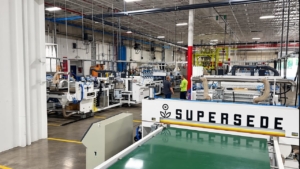
The 100,000-square-foot facility, located in Elkhart County, the epicenter of the U.S. RV industry, significantly expands Supersede’s production capacity to meet accelerating demand from RV manufacturers for high-performance, engineered structural materials and is expected to create more than 50 new jobs in the region.
The Bristol facility launch represents a major milestone, both for Supersede and the RV industry as a whole, as it strengthens Supersede’s ability to serve RV OEMs directly from the region where the majority of the nation’s recreational vehicles are designed and built. By establishing production in Elkhart County, Supersede said it shortens supply lines, improves delivery consistency, and deepens its partnerships with the manufacturers driving the RV industry forward. With the launch of the new facility, Supersede is poised to rapidly transform how RV manufacturers build.
“Supersede’s structural materials were engineered to replace legacy wood-based sheathing and vinyl products with a superior, more consistent alternative,” said Shane Kenyon, co-founder and vice president of engineering at Supersede. Using recycled polypropylene (rPP), the company’s patented extrusion process creates durable, high-strength structural panels that outperform traditional plywood in water resistance, fastener retention, compressive strength, and durability.
According to the company, its materials are moisture- and warp-resistant, contain no toxic treatments such as CCAs or formaldehyde, and are designed to reduce waste and rework during installation, advantages that translate directly into efficiency gains for high-volume RV production lines. The materials enable RV manufacturers to solve floor rot, one of the most significant issues with conventional RV flooring that limits RV lifespans.