The following is an excerpt from The Future of EV RVs from the April 2026 issue of RV PRO magazine. For the full Q&A printed in that issue, click here.
What challenges have you faced in producing an EV RV?
ory Weatherton, senior director of product development, Jayco Family of Companies:
We needed to find a chassis manufacturer that would allow us to tie into their electrical system for the power needs of the components in the RV. We looked at a few different manufacturers until we landed on the Harbinger chassis. Range anxiety is a big deal in the automotive world and even more so in the RVing world. RVers expect to drive multiple hours at one time versus an hour and then needing to recharge the chassis.
Royer Allman, vice president – chassis administration, Forest River Inc.:
The three primary challenges we have faced in producing an EV RV include achieving sufficient daily driving range (ideally 300-350+ miles), managing vehicle weight while maintaining performance, and identifying a reliable, long-term chassis OEM partner. Range becomes particularly challenging once RV weight and payload are factored in. Many EV platforms list optimal range figures under minimal load conditions, and range decreases significantly when additional weight is added. Infrastructure is another hurdle. Charging networks, both highway-based and campground-based, have not yet fully matured to support widespread EV RV adoption. Additionally, the sudden discontinuation of a previous chassis platform reinforced the importance of developing strong, stable OEM partnerships moving forward.
Ivan Wang, chief marketing officer, Evotrex:
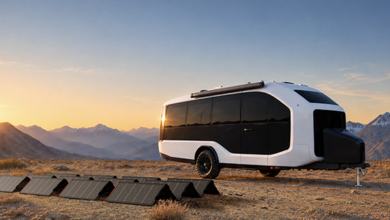
Creating a category-defining product is never easy. It requires understanding market gaps, leveraging the right technology, identifying genuine customer needs and assembling a world-class team. From finding solid partners to launching, delivering and scaling — every step presents unique challenges. Yet, at Evotrex, we are incredibly grateful. We’ve built not just a phenomenal team, but a passionate community of future owners and enthusiasts who constantly exchange ideas, provide essential feedback, and share valuable experiences.
Sam Shapiro, founder and CEO, Grounded:
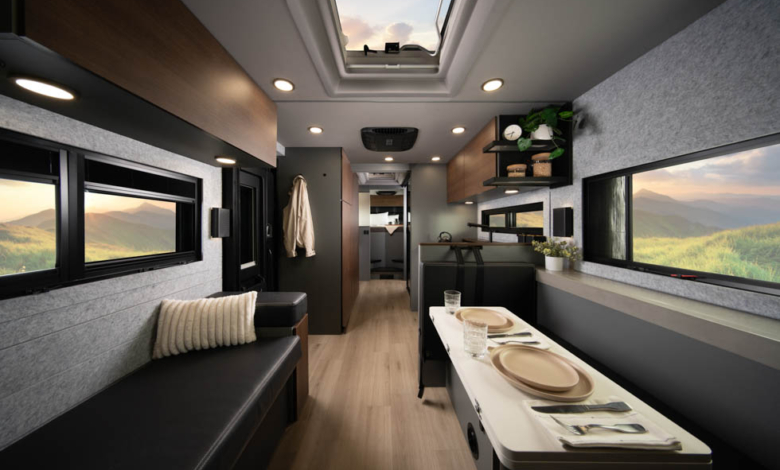
The biggest challenge is that you’re building on platforms that were not designed for this. Electric cargo vans are optimized for last-mile delivery, not living, so we’re working around separated cab compartments, limited rear access and packaging constraints that traditional RV builders don’t have to deal with. Every generation we’ve had to engineer creative solutions around those limitations. The most significant recent challenge has been GM’s decision in October 2025 to discontinue the BrightDrop line. We built three generations of vehicles on that platform, and it’s been an excellent foundation: 286 miles of range, AWD, great safety features. The good news is GM produced a large quantity of 2024 and 2025 units, and we still have access to that inventory to fulfill orders, so we are continuing to sell BrightDrop-based G3s. GM has also committed to continuing service at BrightDrop-certified centers and honoring the 8-year/100,000-mile warranty, so existing and future G3 owners are fully supported. But it also reinforced something we’ve believed from the start: our modular architecture needs to be platform-agnostic. We’re now expanding to build on Rivian, Ford, Harbinger and Slate chassis. The whole point of our system is that the interior modules and smart platform adapt to different vehicles, so a platform change doesn’t mean starting from scratch, it means plugging into a new foundation. That flexibility is turning what could have been a crisis into a growth opportunity.
Toby Kraus, co-founder and CEO, Lightship:
Producing an all-electric RV from a clean sheet platform has required solving challenges that traditional RVs were never designed to address. One of the biggest hurdles is energy density and weight. Integrating a 77 kWh battery, unprecedented in the travel trailer segment, demands careful structural, thermal and safety engineering to preserve towability, stability and interior comfort. Towing efficiency is another core challenge. Conventional travel trailers create significant aerodynamic drag, especially for electric trucks. Lightship addressed this through a low travel profile and its proprietary TrekDrive self-propulsion system. This required developing advanced control logic, hitch force sensing and multiple safety redundancies to ensure the trailer assists the tow vehicle without ever pushing it. Manufacturing has been equally complex. Bringing automotive-grade battery systems and propulsion technology into an industry that has historically operated with far lower levels of electrification, while simultaneously establishing a largely domestic supply chain and meeting applicable safety standards, is a meaningful undertaking. Ultimately, the challenge has not simply been electrifying an RV. It has been reengineering the category around energy, aerodynamics, safety and production discipline to make electric road trips viable and scalable.