The Future of RV Kitchen Design: Balancing Functionality & Space
What dealers and technicians should know about the next generation of mobile cooking.

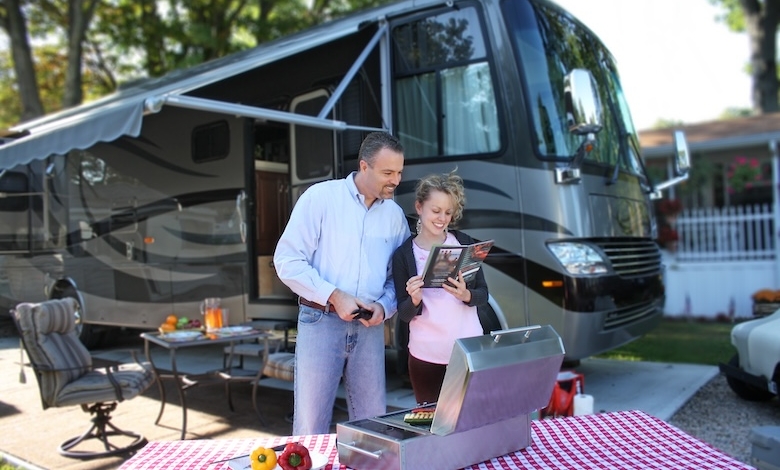
Recreational vehicles are no longer just a way to live on the road. Customers want more than just a place to sleep; they want all the comforts of home on wheels. At the heart of this evolution is the kitchen: a space that, if designed and installed correctly, can be a dealer’s bestselling point and a technician’s dream for long-term reliability.
The future of RV kitchen design is being defined by a move toward all-electric systems, marine-grade durability and basement kitchens that turn a vehicle’s storage area into a social hub. For the people who sell, install and maintain these units, understanding these trends isn’t just about staying current — it’s about providing a bulletproof experience for the end user that keeps them coming back.
The Ongoing Challenge: Making Small Spaces Work
Even in the largest Class A motorhomes, kitchen space is limited. Slideouts help expand living areas, but countertops and appliance footprints still have to be carefully managed.
Designers constantly face the challenge of fitting essential cooking equipment — cooktops, sinks, refrigerators and prep space — into layouts that may offer only a few square feet of usable counter space. To solve this problem, manufacturers have to get creative, often using unconventional shapes to maximize functionality. For example, some RV layouts extend the countertop outward around the sink area while placing the cooktop in a narrower section of the counter. This way, you have a usable sink and cooktop, but also still have enough kitchen workspace to prepare a meal. It’s this lack of space that dealers and technicians have to keep in mind when customers are looking for aftermarket upgrades, because what works in one RV may not work in another.
For dealers, the basement storage area typically reserved for luggage is now prime real estate for high-margin upgrades. While interior square footage is always at a premium, even in coaches with multiple slideouts, the exterior provides a blank canvas for luxury entertainment.
What Technicians Need To Know About Exterior Installs
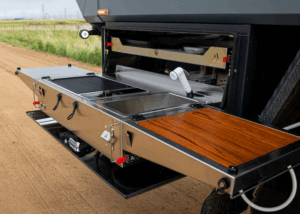 Even without considering a cramped kitchen design, there are a few items technicians still need to plan for when installing exterior components.
- Heavy-Duty Hardware: Modern outdoor kitchens aren’t just portable grills sitting on a shelf. They are built on industrial-strength drawer slides that allow for a full cooking and cleaning station to be pulled out effortlessly.
- Integrated Systems: These setups often include a grill, a mini-sink and a refrigerator or cooler. For the technician, this means managing complex plumbing and electrical runs in a moving, sliding compartment.
- Protection Is Key: High-end units often use automated canvas shades, similar to marine sure shades, that deploy via a button to protect the equipment and the cook from the elements.
The key thing for dealers to remember is that cooking is one of the most social activities that happens around an RV, so the kitchen is as much about entertaining as it is about preparing a meal. Outdoor grills often become the centerpiece of gatherings where friends and family sit under an awning, watch the game on an outdoor TV and share meals together.
For dealerships, highlighting these lifestyle benefits can help drive accessory sales and upgrades. Being able to show a customer a space where seven people can watch the game on an integrated TV while flipping burgers on the grill is a powerful closer.
Why Electric Grills Are Gaining Ground
These innovative kitchen entertainment spaces offer a significant aftermarket opportunity, especially as owners of older motorhomes retrofit outdoor kitchen setups during renovations or upgrades. The system is straightforward but requires attention to structural mounting and heat management.
That’s a major reason for the growing popularity of electric grills over propane.
Gas grills have traditionally been the go-to solution for outdoor cooking. But in an RV environment, especially one where appliances are frequently stored away in enclosed compartments, gas systems introduce additional safety concerns.
Electric grills have come a long way; not only can you prepare restaurant-quality meals of all kinds on them, but their technological advantages also make them well-suited for RV installations.
First, they eliminate the risk of gas leaks or accidental ignition. When an outdoor kitchen module is pushed back into the basement compartment, the grill is safely powered down rather than relying on a closed propane valve.
- Technician Pro Tip: Always recommend electric safety switches. These kits disconnect power the moment the grill lid is closed or the drawer is slid back into the coach, ensuring there is no opportunity for the unit to turn on by itself.
Second, electric grills heat quickly and efficiently because the cooking surface sits in direct contact with the heating element. This allows them to reach cooking temperature faster than many gas grills.
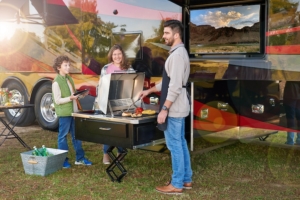 From an installation perspective, electric grills can also simplify heat management. Because the grill housing stays cooler than traditional gas units, technicians typically don’t need to install the same level of thermal insulation around the appliance cutout.
Finally, many RV owners are also discovering that electric grills are easier to operate and maintain than traditional charcoal or propane units. When it comes to cleaning, many models can be wiped down with just a paper towel, or lids and grates are removable and dishwasher safe. This eliminates the need for wire brushes, which are not only a hassle but also a safety hazard if bristles end up in the food. This kind of simplicity appeals to everyone, making the experience more accessible for users who may not have previously enjoyed grilling.
Induction Cooktops Are Becoming the Standard
Inside the RV kitchen itself, induction cooking technology is rapidly replacing traditional radiant or gas cooktops. For RV manufacturers and owners alike, induction offers several advantages.
The biggest is safety. Induction cooktops only generate heat when compatible metal cookware is placed on the surface. If no pan is present, the unit will not heat, and most models automatically shut off within seconds. That feature is particularly valuable in small spaces where accidental contact with hot surfaces is more likely.
Induction systems are also highly energy efficient. Instead of heating the entire cooktop surface, they transfer energy directly into the cookware. This reduces wasted heat and improves overall cooking efficiency.
From a service standpoint, induction cooktops do require adequate airflow because the electronics beneath the glass surface generate heat during operation. Technicians installing aftermarket units should ensure there is sufficient ventilation space beneath the cooktop to prevent overheating.
Power Considerations for Installations
For service technicians, electrical capacity is one of the most important considerations when installing electric cooking appliances.
Before installing a grill or cooktop, technicians must determine how much amperage the RV’s electrical system can safely provide. That available capacity will dictate the size of the appliance that can be installed.
In some cases, customers may want the largest grill available, but the RV’s electrical panel may only support a mid-sized unit. This is particularly important in older motorhomes where the electrical infrastructure may not have been designed for modern electric cooking equipment.
Technicians should evaluate:
- Available amperage on the electrical panel
- Whether the RV primarily runs on shore power, generator or battery/inverter
- Existing appliance loads
Matching the appliance to the available power ensures reliable performance and prevents nuisance breaker trips.
Sustainability & Durability Matter on the Road
The easiest way to keep customers coming back to your dealership is to provide products that don’t end up in a landfill in three years.
High-end brands often offer warranties that far exceed the industry standard, sometimes up to five years on induction units compared to the typical one-year residential warranty. In some cases, quality manufacturers will even replace units that fail outside of warranty because they shouldn’t have failed in the first place.
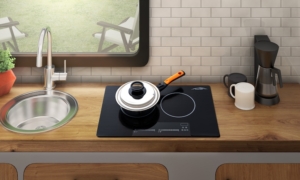 Of course, in order to remain in good working condition on the road, unlike residential appliances, RV kitchen equipment must operate reliably while enduring constant vibration, road shock and environmental changes.
Some appliance manufacturers address this by designing cooktops and burners with components mounted on springs rather than rigid brackets. This allows the appliance to absorb vibration during travel instead of transferring stress directly to internal components. This design approach is commonly used in marine applications, where equipment must withstand heavy movement on the water.
In fact, many cooking appliances used in RVs today originate from marine engineering. Because marine equipment is built to withstand saltwater exposure, constant vibration and harsh environmental conditions, it often performs exceptionally well in RV applications.
For dealers and technicians, this crossover between marine and RV technology is worth noting. Marine-grade appliances can often provide higher durability in mobile environments.
The Road Ahead
As more people spend longer periods on the road, expectations for cooking performance and convenience will continue to rise. Along with it, RV kitchen design will continue to evolve to provide the highest level of entertainment and quality of life on the road.
Future innovations are likely to focus on improved energy efficiency, smart appliance integration and further expansion of outdoor cooking spaces. For dealers and technicians, staying informed about these trends will be key to meeting customer expectations and supporting the next generation of RV kitchen systems.
Because at the end of the day, the RV lifestyle isn’t just about where people travel, it’s about how comfortably they can live once they get there.