Material Matters: How Recycled Tire Rubber Outperforms Plastic in RV Leveling Applications
Devon Wilson, CEO and founder of RV SnapPad, offers an inside look at the process of turning commercial truck tires into durable leveling solutions.

When RV SnapPad set out to rethink the humble leveling jack pad, sustainability was not the starting point — performance was.
The company’s foundation traces back to the invention of the original orange plastic leveling blocks widely used throughout the RV industry — an innovation from Gordon Wilson, father of now CEO and founder Devon Wilson. That legacy of practical problem-solving shaped RV SnapPad’s next move: eliminating the need for loose plastic blocks beneath RV leveling jacks by creating a permanent attachment.
From the beginning, material requirements were demanding. Any solution would need to withstand extreme weight, constant ground contact and prolonged exposure to weather. Plastic, while effective for temporary blocking, was not a long-term answer for a permanently mounted component. The search for a better material led to an unlikely but logical candidate: recycled commercial truck tire rubber.
Truck tires are engineered to carry tens of thousands of pounds across thousands of highway miles while enduring UV exposure, temperature swings, road salt and constant abrasion. If that material could perform under those conditions, supporting a stationary RV represents a significantly less aggressive application. The sustainability story followed the performance decision as opposed to the other way around.
The Differentiators
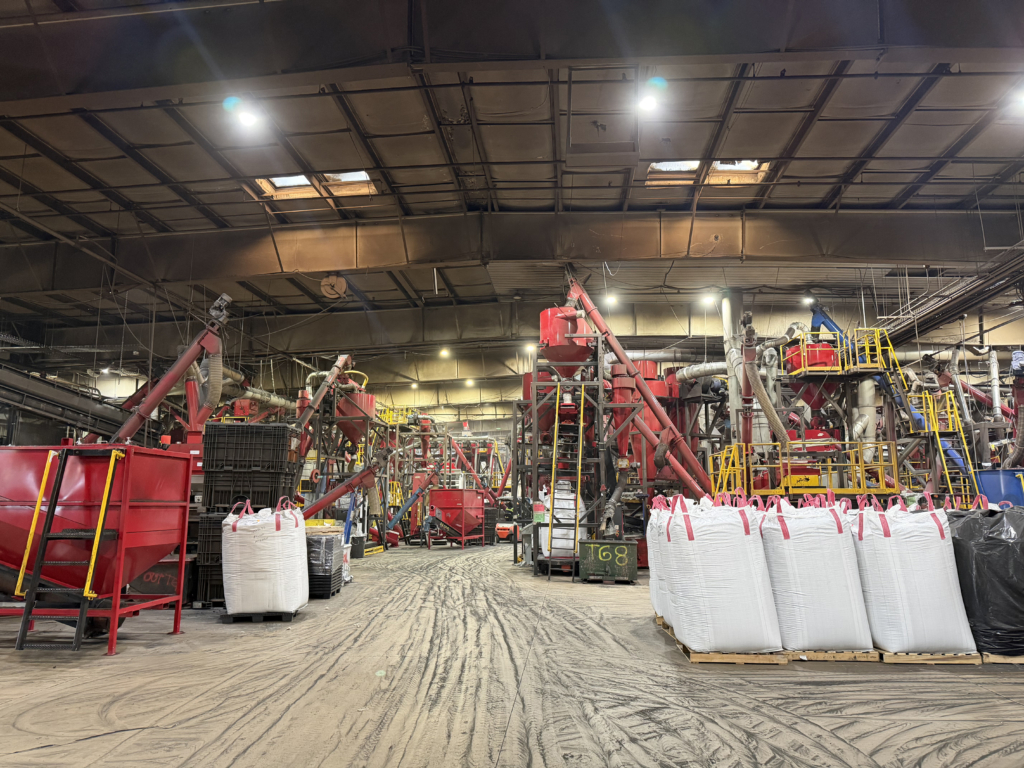
Today, RV SnapPad’s products are manufactured in the United States using domestically sourced, end-of-life commercial truck tires. The company’s primary manufacturing partner processes hundreds of millions of pounds of tire material annually. Steel belts are mechanically removed, and the remaining rubber is shredded, refined and sorted into specific granule sizes. The crumb rubber is then blended with a custom urethane compound in a high-intensity mixer before being hydraulically compressed at more than 100 tons in a proprietary heated molding process.
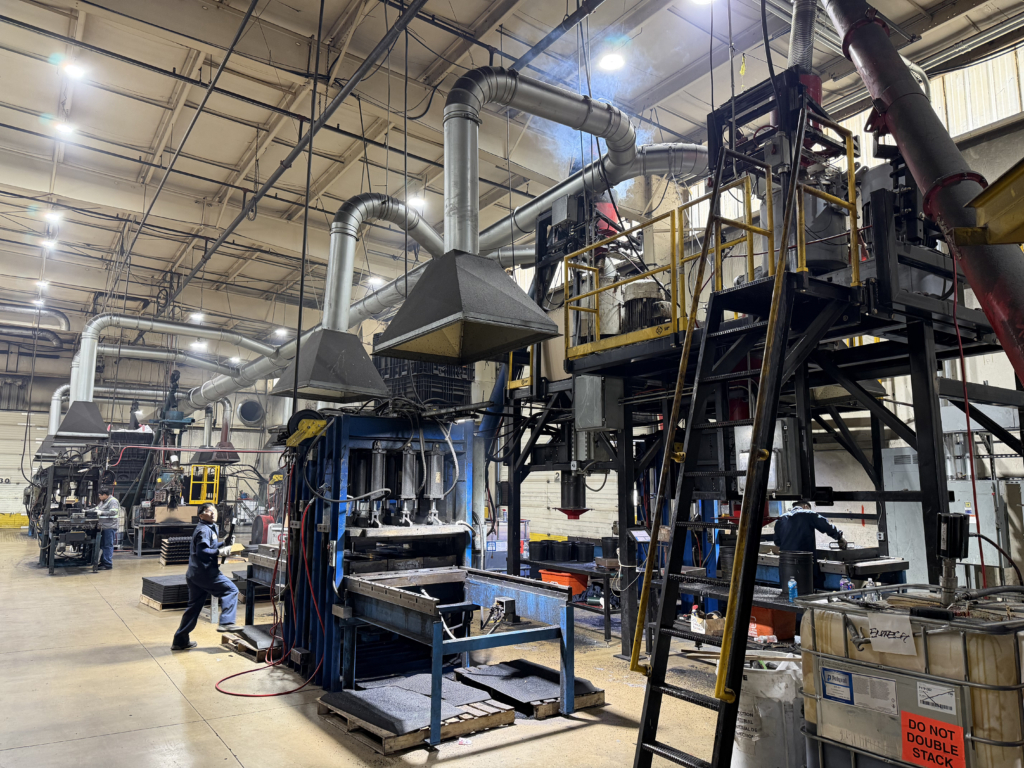
An additional domestic manufacturing partner molds select product lines to RV SnapPad’s specifications using crumb rubber supplied by the primary recycler. Over time, the company has refined its rubber blends, density targets and molding parameters to ensure structural integrity and dimensional consistency. Rather than generic recycled material, it is purpose-built rubber engineered specifically for high-load RV applications.
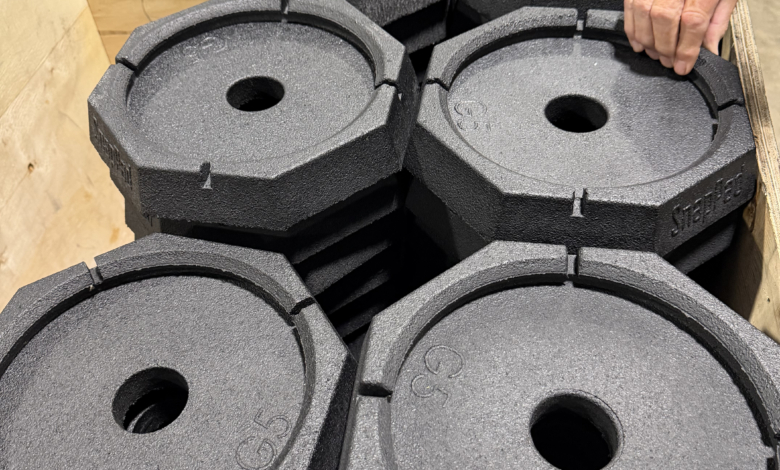
Material usage per unit is significant. Individual pads weigh between approximately three and nine pounds depending on diameter and application. A typical four pack for a motorhome can incorporate 20 to 30 pounds of repurposed tire material, while larger Class A or Class C motorhomes and triple-axle fifth wheels may require four or six packs of larger pads, collectively totaling 50 pounds or more of recycled rubber.
As of February 2026, the company reports recycling nearly 6 million pounds of rubber — material diverted from landfills or lower-value secondary uses and converted into long-life components designed to remain attached to an RV for years. The approach reflects a practical application of circular economy principles within the RV accessory segment.
Performance remains the central selling point. In leveling applications, recycled tire rubber offers several advantages over rigid plastics and composites.
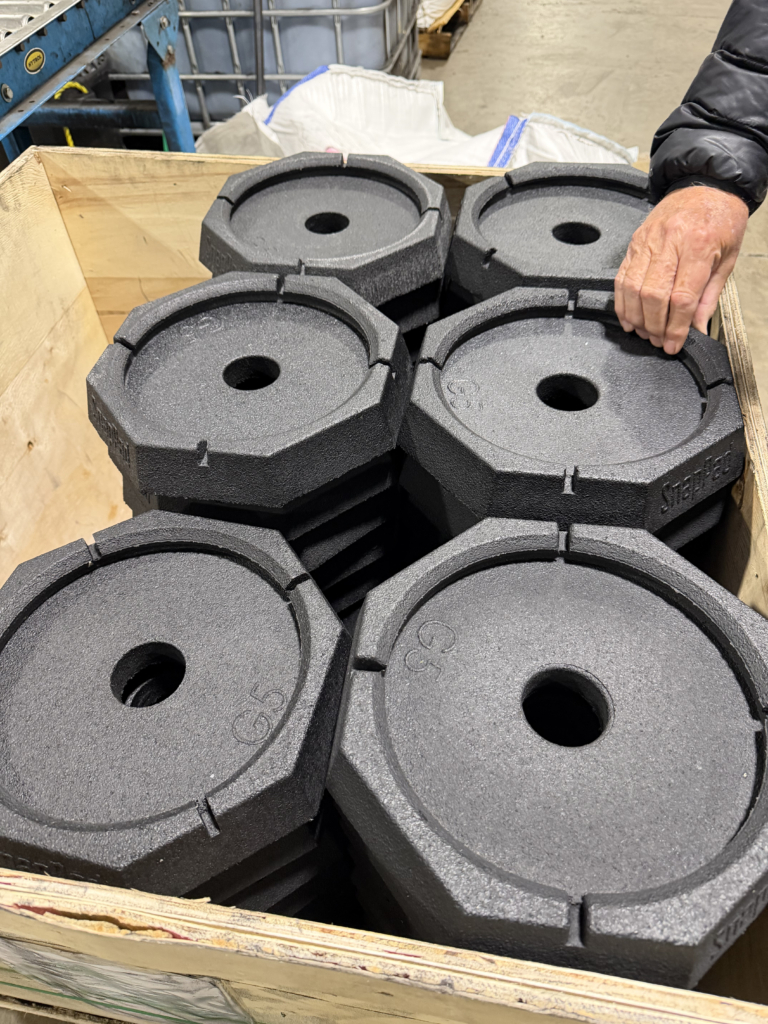
From a durability standpoint, tire rubber is engineered for abrasion resistance and sustained stress. Unlike rigid plastics, it does not crack under prolonged static compression. In terms of load-bearing performance, rubber distributes weight more evenly, improves ground grip and absorbs micro-movement under static loads — important when leveling jacks support thousands of pounds per foot.
Weather resistance is another differentiator. The combination of high heat, extreme compression and urethane bonding produces a dense product capable of withstanding UV exposure, road chemicals, freeze-thaw cycles and wide temperature swings. Additionally, rubber provides inherent vibration dampening, absorbing minor ground shifts and micro-vibrations to improve stability and reduce hard-surface transfer when the RV is stationary.
Prioritizing Performance
Transforming recycled tire rubber into a RV component, however, has required significant engineering discipline. Achieving the correct density to balance compression and rigidity was critical. Designing a secure retention system that allows pads to remain permanently attached to leveling feet presented its own challenges — the hot compression molding process introduces material shrinkage, which must be precisely calculated to maintain tight tolerances across dozens of jack foot diameters. Tooling design, cure times and compound consistency all factor into performance.
Maintaining quality control at scale and educating customers on compatibility and clearance requirements have also been key considerations. Recycled rubber behaves differently than injection-molded plastic, demanding careful process control to ensure consistent results.
Looking ahead, RV SnapPad views recycled materials in RV accessories as an emerging opportunity rather than a known trend. Much of the industry’s sustainability focus has centered on energy systems such as solar and lithium batteries, while structural accessories have received less attention. Broader adoption will depend not on environmental messaging alone, but on proven durability and reliability.
For RV owners and OEM partners alike, performance remains nonnegotiable. The future of recycled materials in the segment will hinge on engineering products that meet or exceed traditional standards while simultaneously reducing waste. For SnapPad, that philosophy — building better products first and achieving sustainability as a result — continues to guide its direction.